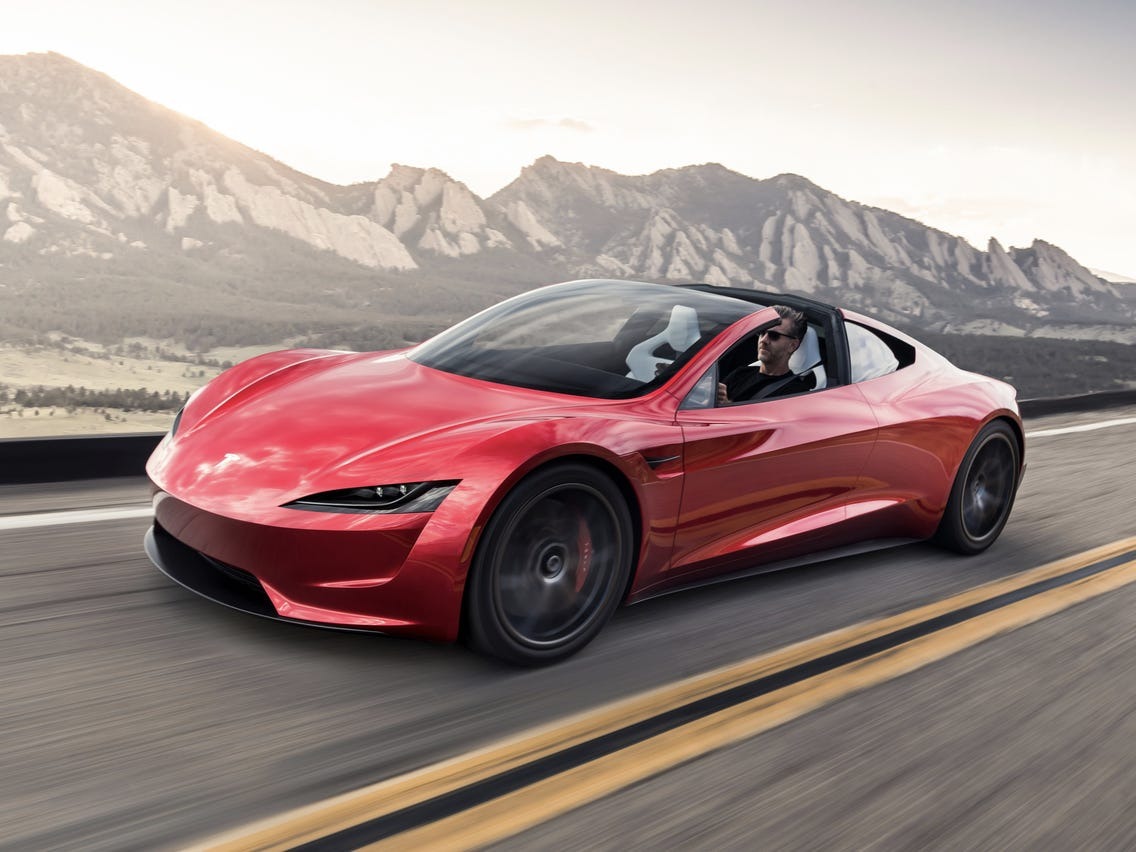
🚀 Roadster 2.0: Why is Tesla Still Pushing Back the Date, and What Does the ‘SpaceX Package’ Actually Entail?
Since its shock reveal in 2017, the Tesla Roadster 2.0 has occupied a unique space in the automotive industry: a promise of hypercar performance that consistently remains just out of reach. With production dates repeatedly moving further out, the excitement for the $200,000+ electric marvel is turning into frustration for reservation holders.
Here, we dissect the likely reasons behind the ongoing delays and dive into the outrageous claims of the infamous ‘SpaceX Package.’
⏳ The Perpetual Delay: Why the Hold Up?
Elon Musk has often attributed the delay of the Roadster to the need to focus resources on higher-volume projects, such as the Model Y and the Cybertruck production ramp. However, the true reasons are likely more complex and tied to technology and manufacturing constraints:
1. Prioritizing Volume over Halo Products
Tesla’s core mission is to accelerate the world’s transition to sustainable energy. High-volume, affordable vehicles (Model 3/Y, and soon the Model 2/Redwood) directly serve this goal. The Roadster, a low-volume, high-cost halo product, is less critical to the company’s immediate financial or ecological targets. It’s an engineering exercise that can wait until the company is generating surplus cash and has finalized its next-generation platform.
2. Battery Technology Milestones
The Roadster 2.0 was promised with an unprecedented 620 miles (1,000 km) of range thanks to its massive 200 kWh battery pack. To achieve this, Tesla needs the 4680 battery cell technology to reach peak maturity in terms of energy density and cost efficiency. Any hiccup in the 4680 cell production or performance directly impacts the Roadster’s ability to hit its promised specifications.
3. Focus on AI and FSD
Musk has been clear that Tesla is now an “AI and Robotics company.” Resources are heavily concentrated on the Full Self-Driving (FSD) stack, the Dojo supercomputer, and the Optimus humanoid robot. The engineering talent required to finalize the Roadster’s niche performance systems may simply be deployed elsewhere for higher corporate priority.
🛰️ Decrypting the ‘SpaceX Package’
The most sensational claim surrounding the Roadster is the optional “SpaceX Package,” an upgrade that sounds pulled directly from science fiction.
Musk claimed this package would replace the two rear seats with a system of cold-air thrusters using compressed air (likely inert gas) to dramatically boost performance.
| Specification | Standard Roadster (Claimed) | Roadster with SpaceX Package (Musk’s Claim) |
| 0–60 mph | 1.9 seconds | 1.1 seconds (Faster than a free-fall) |
| Top Speed | Over 250 mph | Unknown, potentially higher |
| Technology | All-electric powertrain | Electric motors + 10 small rocket thrusters |
Is it Feasible?
The concept of using thrusters for vehicle stability and performance is not entirely new (seen in concept cars), but achieving a 0-60 mph time of 1.1 seconds using only compressed air is an extraordinary engineering feat.
- How it Works (The Theory): The thrusters would likely serve two purposes: “Cold Gas Thrusters” to vector thrust for stability at high speeds/corners, and a “Boost Mode” where all thrusters fire simultaneously to dramatically reduce the time it takes to accelerate off the line. This is essentially creating downforce and immediate forward momentum without relying solely on tire grip.
- The Regulatory Hurdle: While technically possible, the use of thrusters on public roads would be a massive regulatory challenge in every major market, especially concerning the potential danger to pedestrians and other vehicles from the exhaust plume.
Our Take: The SpaceX Package is less about sustained top speed and more about a brutal, physics-defying launch experience. It serves as a powerful marketing tool, emphasizing Tesla’s engineering superiority, even if it might be restricted to track use.
🏁 The Future is (Still) Electric and Fast
Despite the delays, the Roadster 2.0 remains a foundational statement for the electric vehicle industry. Its eventual arrival will set a new benchmark for performance.
The current expectation, based on Musk’s recent statements about the need for its systems to “be flawless,” is that the Roadster 2.0 production will begin in late 2026 or early 2027, following the full Cybertruck ramp-up and stabilization of the 4680 battery cell supply chain.
For those who reserved a spot back in 2017, the wait continues—but the promise of a sub-2.0 second 0-60 mph sprint is a powerful motivator.