The Real Reason Tesla Doesn’t Support Apple CarPlay
As Tesla continues to dominate the electric vehicle market, a frequently asked question remains: Why doesn’t Tesla support Apple CarPlay? The answer lies in Tesla’s unique approach to software development and the unparalleled user experience they aim to offer.
Tesla’s Proprietary Infotainment System
One of the main reasons Tesla doesn’t integrate Apple CarPlay into their vehicles is because of their proprietary infotainment system. Developed in-house, Tesla’s software is designed to offer a seamless and highly intuitive user experience. It includes a multitude of features that outshine those available through Apple CarPlay.
Key Features of Tesla’s Infotainment System
Tesla’s infotainment system offers a range of functionalities, including navigation, media streaming, and car controls. Furthermore, Tesla frequently updates its software over-the-air, introducing new features and improvements without the need for manual updates. This approach ensures that Tesla owners always have access to the latest technology and functionalities.
The Limitations of Apple CarPlay
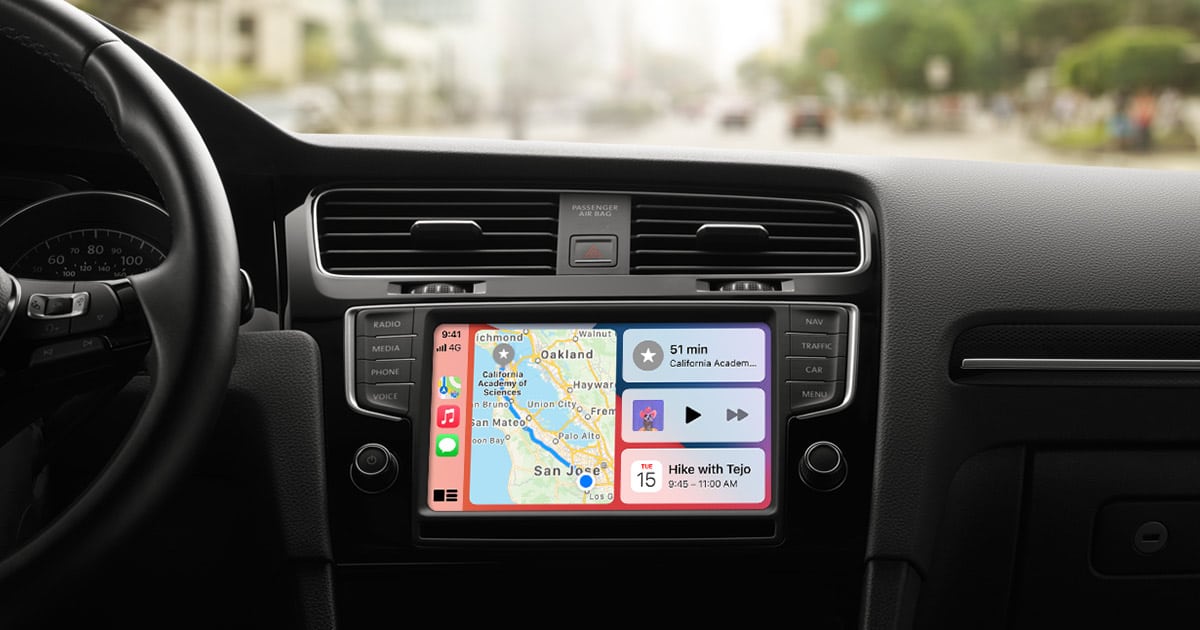
While Apple CarPlay is popular among drivers, it primarily serves as a bridge for integrating an iPhone with a car’s infotainment system. This can be incredibly useful in vehicles with outdated or less sophisticated systems. However, for a high-tech vehicle like a Tesla, which already boasts advanced features, the addition of Apple CarPlay offers limited value.
User Experience and Integration
Tesla’s decision to forego Apple CarPlay is also influenced by their commitment to an exceptional user experience. The Tesla interface is tailored to function seamlessly with all aspects of the vehicle, from touchscreens to voice commands. Introducing CarPlay could complicate this well-integrated system, potentially detracting from the streamlined experience that Tesla aims to provide.
Over-The-Air (OTA) Updates
Another significant advantage of Tesla’s in-house software is the ability to provide over-the-air (OTA) updates. These updates can enhance functionality, fix bugs, and introduce new features, ensuring that the user experience continues to improve over time. This is a major selling point for Tesla owners, who benefit from a constantly evolving technological landscape within their vehicles.
Customer Feedback and Market Strategy
Interestingly, despite the lack of Apple CarPlay, Tesla owners generally report high satisfaction with their infotainment systems. This feedback supports Tesla’s strategy of focusing on their proprietary software, which they believe offers a superior user experience compared to third-party integrations like CarPlay.
The Future of Tesla’s Infotainment
Looking ahead, Tesla is expected to continue enhancing their infotainment system, leveraging emerging technologies such as artificial intelligence and augmented reality. These innovations will likely further distinguish Tesla from competitors and ensure they remain at the cutting edge of automotive technology.
In conclusion, Tesla’s decision not to support Apple CarPlay is driven by their desire to offer a robust, integrated, and constantly improving user experience. With their proprietary infotainment system setting the industry standard, Tesla demonstrates that they don’t need external software to deliver exceptional value to their customers.
🔍 FAQ – Why Tesla Doesn’t Support Apple CarPlay
1. Does Tesla support Apple CarPlay or Android Auto?
No. Tesla vehicles do not support Apple CarPlay or Android Auto, unlike many other modern vehicles.
2. Why doesn’t Tesla include Apple CarPlay?
- Tesla has developed its own integrated infotainment system, which they believe offers a superior, seamless experience.
- Elon Musk and Tesla aim for full vertical integration, controlling both software and hardware to optimize performance.
- Relying on third-party systems like CarPlay would limit Tesla’s ability to innovate with unique features like OTA updates, in-car games, and the Tesla App ecosystem.
3. What alternatives do Tesla owners have?
- Tesla’s native infotainment system includes navigation, media streaming (Spotify, YouTube, Tesla Theater), and voice commands.
- Bluetooth audio allows streaming from iPhone or Android devices.
- Some apps and services are built directly into the Tesla UI, offering functionalities similar to CarPlay, like maps, music, and podcasts.
4. Does Tesla’s system offer any advantages over CarPlay?
- Over-the-air updates improve and add features over time.
- Seamless integration with the vehicle: autopilot, energy monitoring, and climate control are fully embedded.
- Unique features like Tesla Arcade, Tesla Theater, and in-car camera feeds are exclusive to the Tesla system.
5. Are there any workarounds to use Apple CarPlay?
- Some third-party solutions exist, like mirroring apps or devices, but they are not officially supported by Tesla.
- Using these workarounds can be slower, less stable, and may void warranties if not implemented carefully.
6. How do Tesla drivers manage iPhone functionality?
- Bluetooth pairing for calls and music.
- Tesla app integration for controlling the car remotely, checking charging status, and unlocking/locking doors.
- Safari and streaming apps on the car’s touchscreen for media and web access.
7. Has Tesla ever commented on supporting CarPlay in the future?
- Elon Musk has repeatedly stated that Tesla is not interested in integrating CarPlay, as it would limit Tesla’s custom software ecosystem.
- The company prefers to expand its own apps and features rather than rely on third-party platforms.
8. Do other automakers face this issue?
- Most automakers adopt CarPlay and Android Auto to satisfy customer expectations and ensure compatibility with smartphones.
- Tesla’s approach is unique because it treats the car as a complete tech platform, not just a vehicle with phone mirroring.
9. How does this decision affect user experience?
- Users fully immersed in Tesla’s ecosystem enjoy seamless control and unique features.
- However, drivers accustomed to CarPlay may experience a learning curve adapting to Tesla’s UI.
10. Should Tesla owners be concerned about lack of CarPlay?
- For most users, Tesla’s native system provides equivalent or superior functionality.
- The system continues to receive regular updates, improving maps, media, and connectivity features, making CarPlay less necessary.
Those are valid points, but the reason is likely also related to economics, as users with access to CarPlay are more likely to decide their Premium subscription isn’t worth it once Spotify is no longer included in the subscription by December 2024. Google Maps can show satellite images and traffic just fine.
It is possible to use navigation and remote control your Tesla without a Premium subscription, although without camera access. This means that Tesla will have to pay for a low data usage SIM card subscription while customers are not paying for it, hence only Premium customers can cover that cost. Therefore, Tesla would want to retain Premium subscribers including artificially removing features that are perfectly possible to run given a Wi-Fi hotspot, like satellite images and traffic data.