The Tesla Cybertruck, Elon Musk, Superchargers and the Cybercab have all been in the news today
Tesla is no longer just an electric vehicle manufacturer. It has become a convergence point where transportation, artificial intelligence, energy infrastructure, and industrial design collide. From battery architecture breakthroughs to AI-driven ambitions and bold vehicle concepts, Tesla’s ecosystem is shaping how the next decade of innovation will unfold.
This article connects the dots between Tesla’s most impactful technological evolutions, offering readers a clear pathway to explore each innovation in depth while reinforcing the broader narrative: Tesla is building a vertically integrated future, not just cars.
Tesla Cybertruck and the Reinvention of Utility Vehicles
The arrival of the Cybertruck represents more than a radical design choice—it signals a shift in how utility, durability, and public service vehicles are imagined. As governments and law enforcement agencies look to electrify their fleets, Tesla’s stainless-steel exoskeleton and software-first approach are redefining what a patrol vehicle can be.
A deeper look into this transformation can be found in Tesla Cybertruck’s impact on the future of patrol vehicles, where real-world use cases and strategic implications are explored in detail.
This shift reflects a larger trend: electric vehicles are no longer niche—they are becoming mission-critical assets.
Customization as a Cultural Signal in the Tesla Ecosystem
Tesla ownership has evolved into a cultural statement. Beyond performance and sustainability, personalization has emerged as a powerful expression of identity within the Tesla community. Vehicle wraps, once reserved for commercial fleets, are now an essential part of Tesla culture.
The growing demand for personalization highlights how Tesla vehicles act as platforms rather than static products. This phenomenon is unpacked in the rise of custom wraps in the Tesla community, showing how aesthetics, branding, and technology intersect.
Customization reinforces brand loyalty and transforms customers into ambassadors—an often underestimated competitive advantage.
Elon Musk, AGI, and the High-Stakes AI Timeline
While Tesla continues to push hardware boundaries, its most ambitious bet may be invisible: artificial intelligence. Elon Musk’s “AGI or bust” stance underscores a belief that general intelligence is not optional—it’s existential.
Tesla’s real-world data advantage, powered by millions of vehicles, places it in a unique position within the AI race. But the window is narrow. The strategic urgency behind this vision is examined in Elon Musk’s AGI plan and why the next 24 months matter.
AI is not a side project for Tesla—it is the operating system of its future.
Superchargers as the Backbone of the Energy Transition
Tesla’s Supercharger network has quietly become one of the most critical pieces of EV infrastructure worldwide. Expansion is no longer just about convenience; it’s about grid resilience, renewable integration, and energy sovereignty.
The scale and strategic importance of this rollout are detailed in Tesla’s massive Supercharger expansion and renewable energy footprint.
By integrating charging with renewable energy sources, Tesla is building an ecosystem where mobility and energy reinforce each other—an approach few competitors can replicate.
The 4680 Battery: A Structural Breakthrough
At the heart of Tesla’s innovation lies its battery strategy. The 4680 cell is not just an incremental improvement; it represents a structural rethink of how vehicles are built.
Higher energy density, reduced costs, and improved thermal performance allow Tesla to scale faster while improving margins. This leap forward is explored in Tesla’s innovative 4680 battery and EV efficiency gains.
Battery innovation remains Tesla’s strongest moat—and its most misunderstood advantage.
Rethinking Battery Architecture from the Ground Up
Beyond the 4680 cell itself, Tesla’s broader battery architecture breaks away from industry norms. Structural packs, simplified manufacturing, and vertical integration are redefining how EVs are engineered.
A comprehensive breakdown of this philosophy can be found in Tesla’s unconventional battery architecture and vehicle design.
This architectural shift doesn’t just improve efficiency—it enables entirely new vehicle formats.
Cybercab Design: Where Autonomy Meets Functionality
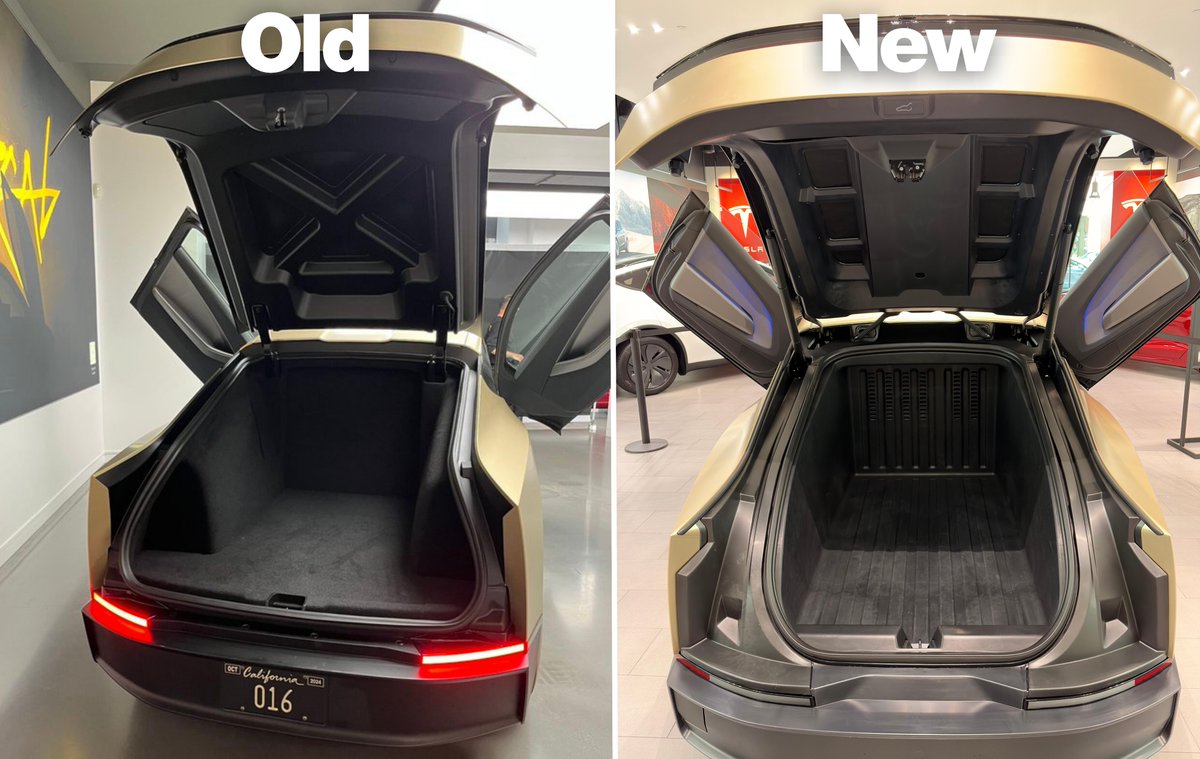
As Tesla moves toward autonomous mobility, vehicle design must evolve accordingly. The Cybercab concept reflects this transition, prioritizing space efficiency, modularity, and user experience over traditional automotive conventions.
The evolution of Tesla’s rear trunk design illustrates how autonomy reshapes even the smallest details. This design journey is explored in the design evolution of the Tesla Cybercab rear trunk.
When vehicles no longer need drivers, every design assumption changes.
Conclusion: Tesla as a System, Not a Company
Tesla’s strength does not lie in any single product. It lies in system-level thinking—where AI, energy, manufacturing, and design reinforce one another. Each innovation feeds the next, creating compounding advantages that are difficult to replicate.
Whether it’s batteries, AI timelines, charging infrastructure, or vehicle design, Tesla continues to operate on a different axis than traditional automakers.
Understanding Tesla today means understanding the architecture of the future.