In recent years, the progression in autonomous vehicle technology has marked a significant shift in the issues of road safety and efficiency. One of the leading entities in this innovation space is Tesla. Its Full Self-Driving (FSD) suite has been a topic of discussion and study, especially with its capability to detect and respond to different road situations faster than a human driver.
The Evolution of FSD Technology
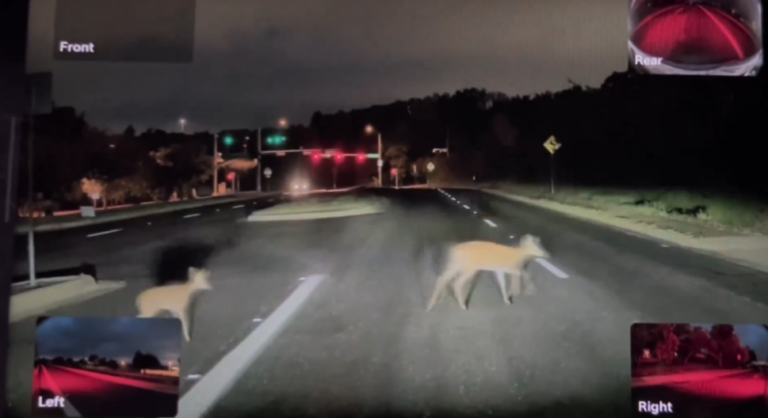
Tesla’s FSD technology is not merely an incremental upgrade but a transformative advancement in vehicle automation. Unlike traditional systems that rely heavily on human intervention, Tesla’s FSD utilizes advanced algorithms and a comprehensive sensor suite to interpret its environment. This allows the vehicle to make proactive decisions on the road, such as detecting cyclists or unexpected obstacles. It’s a remarkable leap from older adaptive cruise control systems.
Technical Insight: The latest End-to-End Neural Networks (v12.x and v13) allow the vehicle to process visual data similarly to the human brain, but with 360-degree awareness. This allows the vehicle to make proactive decisions on the road, such as detecting cyclists’ intent or reacting to unexpected obstacles with a latency lower than human reflexes.
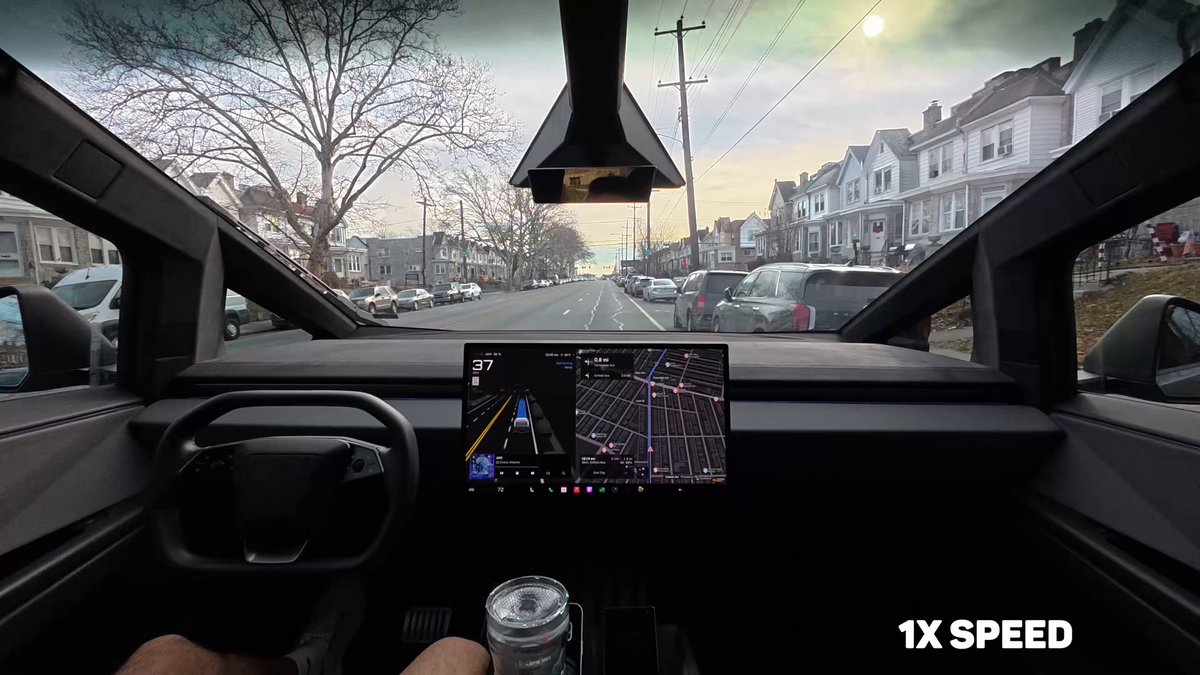
FSD in Action: How Tesla Vision predicts and protects vulnerable road users
Why Safety and Efficiency Go Hand in Hand
Road safety has always been a primary concern, but the integration of technologies like Tesla’s FSD brings a fresh approach. The system’s ability to detect cyclists efficiently, as reported in various social media observations, exemplifies the potential of AI-driven safety mechanisms. Beyond safety, this technology enhances road efficiency. Traffic congestion is reduced as vehicles communicate and adjust to real-time information, creating a smoother flow of traffic without the common inefficiencies induced by human error.
A Comparative Perspective
Comparing human drivers with Tesla’s FSD, the advantages are discernible. While human drivers rely on visual acuity and reaction time, which can be compromised by fatigue or distraction, Tesla’s technology is inexhaustible and consistent. The speed with which FSD reacts to potential threats is not only quicker but can also process a wider array of data inputs simultaneously, ensuring a level of safety and responsiveness that humans could aspire to but not consistently achieve.
Challenges and Future Prospects : The European Roadmap
Despite its promising capabilities, FSD technology faces challenges in Europe. Regulatory frameworks are one significant barrier as legislators struggle to keep up with the rapid pace of technological change.
- The DCAS Milestone: European deployment depends on the UN ECE R171 (DCAS) regulation. Tesla has targeted February 2026 for a major compliance demonstration with the Dutch regulator (RDW), which could unlock the system for the entire continent.
- The “Ride-Along” Phase: In December 2025, Tesla launched demonstration tours in cities like Paris and Berlin, allowing the public to experience the system from the passenger seat.
Furthermore, public trust remains a hurdle. While Euro NCAP recently awarded the 2025 Model Y a near-perfect score for Active Safety (92%) and Vulnerable Road User protection (86%), some pedestrians express unease about the reliability of fully autonomous systems.
To illustrate the performance differences and the European deployment framework, here is a factual comparison table based on data from December 2025:
Comparative Overview: Tesla FSD vs. Human Driver & US vs. Europe
| Category | Tesla FSD (Supervised) | Human Driver (US Average) | European Status (Dec 2025) |
| Safety (Miles per crash) | ~6.36 million miles (Q3 2025) | ~702,000 miles (NHTSA) | FSD is statistically 9x safer than manual driving. |
| Reaction Time | Milliseconds (360° Vision processing) | ~1.5 to 2 seconds (Perception + Braking) | Crucial for unpredictable cyclist movements. |
| Urban Availability | Active (Supervised) in USA/Canada | Variable (Fatigue, Stress) | Currently in “Ride-Along” phase (demo tours) in major EU cities. |
| Regulatory Framework | Self-certification (North America) | Standard License | Transitioning to DCAS (UN R171) standards. |
| Hardware Standard | AI4 / HW4 (High-res cameras) | Human Vision (Limited FOV) | Testing v14+ specifically for narrow EU streets. |
| Final Homologation | Fully Deployed | N/A | Target: February 2026 (RDW demonstration). |
Conclusion: Beyond the Horizon of Autonomous Driving
The advancement of Tesla’s FSD technology is a testament to the potential that autonomous driving holds for a safer future. As technologies evolve, vehicles equipped with AI capabilities like Tesla’s FSD are expected to redefine transportation. Although challenges remain, the benefits to safety and efficiency highlight the transformative potential of these systems. The road ahead promises innovations that could sustainably enhance how we drive.