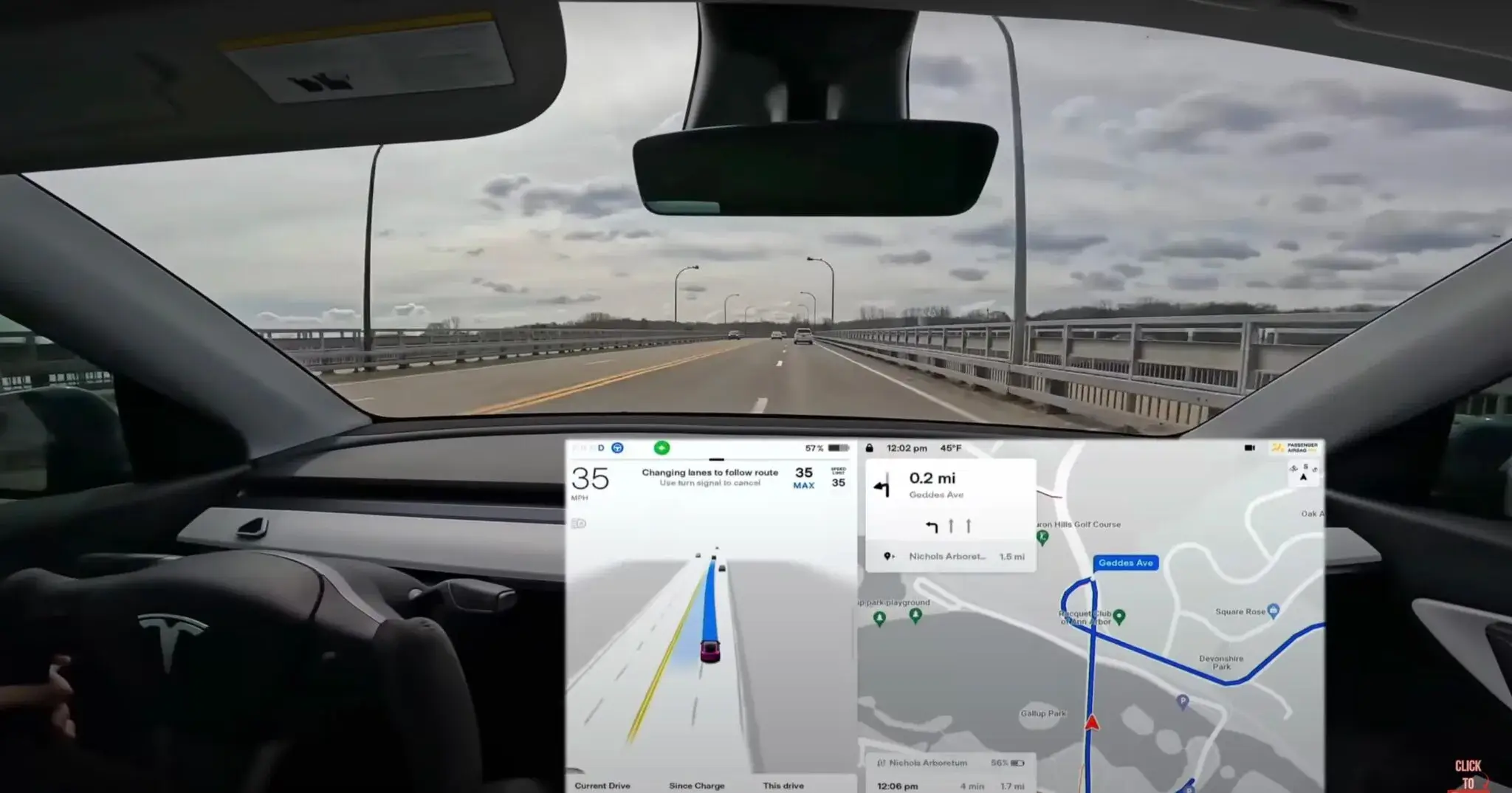
A Tesla avoids another car with FSD (autonomous Driving)
Advanced Driver Assistance Systems (ADAS) are rapidly changing the landscape of road safety. These technologies, encompassing features like Full Self-Driving (FSD) capabilities, are at the forefront of reducing human error in driving, potentially preventing countless accidents.
The Rise of Self-Driving Technology
The development of self-driving technology reflects a significant evolution in automotive safety. Tesla’s Full Self-Driving software is among the most talked-about innovations, designed to protect drivers and passengers by taking over in hazardous conditions. This capability was recently highlighted in an incident involving a Tesla traveling through New Mexico. The vehicle’s autonomous systems helped avoid a potentially fatal head-on collision, resulting only in a broken mirror and window.
Reducing Road Traffic Accidents
The widespread implementation of ADAS has already begun to demonstrate its impact. Road traffic accidents are typically caused by human error, often influenced by distractions or fatigue. Self-driving technology minimizes these risks by continually assessing the driving environment, making informed decisions faster than a human driver could.
Technological Components of ADAS
ADAS comprises several technological innovations working together. These include sensors, cameras, radar, and Artificial Intelligence (AI) algorithms that process data in real time. **AI advancements are particularly noteworthy as they have improved the reliability of these systems, offering better prediction and avoidance mechanisms**.
Public Perception and Adoption
While the benefits of self-driving technologies are clear, public perception remains mixed. Some view these advancements with optimism, anticipating fewer accidents and increased road safety. Others are skeptical, concerned about software reliability and ethical implications. However, as technology continues to prove its effectiveness in real-world scenarios, such hesitations are gradually diminishing.
Future Implications for UK Roads
In the UK, the adoption of self-driving vehicles could significantly impact car ownership models, public transportation, and urban planning. **The government has shown interest in supporting innovation** in this sector, aiming to reduce traffic congestion and emissions. Future roads may see a blend of autonomous and manually-driven vehicles, with smart infrastructure supporting seamless interaction.
The Road Ahead
The continued evolution of self-driving technology will undeniably shape the future of transportation. As more success stories emerge, the trust in autonomous systems is set to grow, leading to broader acceptance and integration into everyday life. This incident in New Mexico, where FSD technology potentially averted disaster, underscores the importance of embracing these innovations for safer roads and a brighter automotive future.