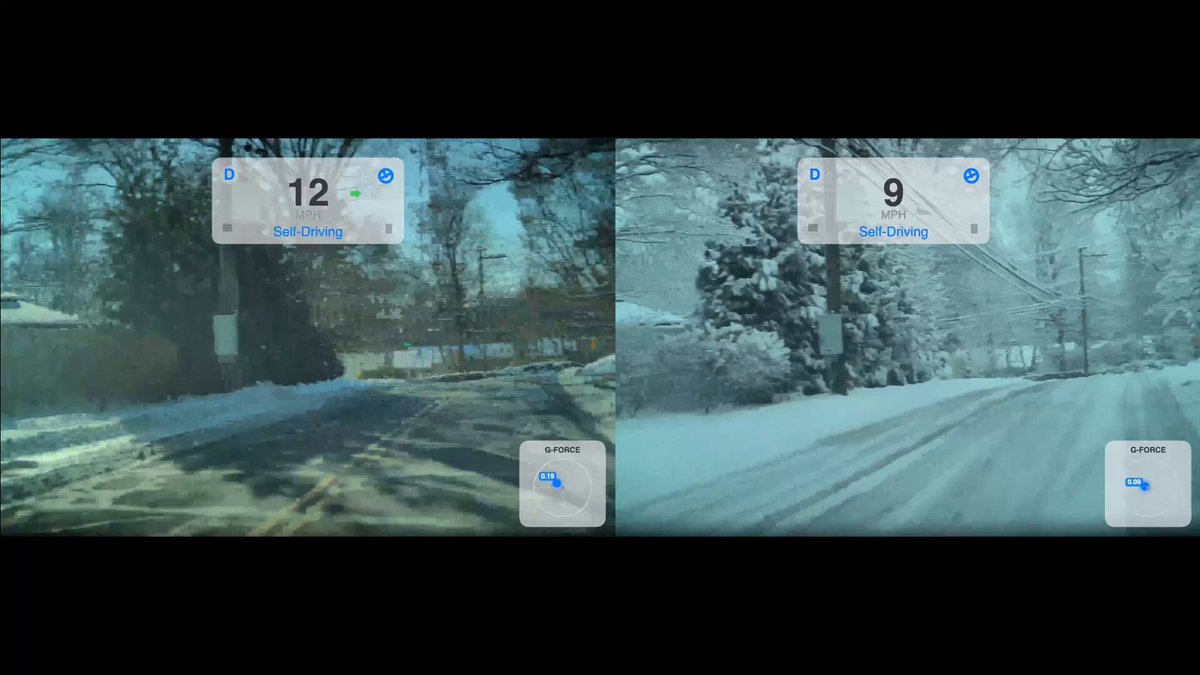
Advancements in Tesla’s FSD: Navigating Weather Challenges with Precision
The progression of Tesla’s Full Self-Driving (FSD) capabilities is palpable, especially as it navigates varied weather conditions with greater efficacy. The release of FSD version 14 showcases a significant leap in how these autonomous systems handle adverse weather scenarios. As Tesla continues to refine its technology, its ability to adapt to changing environments is becoming a pivot point for the future of autonomous driving.
A Leap Towards True Autonomy
Are we closer to achieving fully autonomous vehicles? With Tesla’s continued upgrades, that possibility seems more tangible. The latest FSD update includes enhanced capabilities to interpret and respond to different weather conditions. This means the technology can now adjust its sensitivity to snow, rain, and other environmental changes, marking a critical milestone.
The Technical Backbone of FSD v14
Behind FSD’s adeptness lies the intricate fusion of machine learning algorithms and sensor integration. Version 14 highlights improvements in predictive modeling, where massive datasets are utilized to enhance decision-making processes in real-time driving. This prowess allows the system to determine the optimal path with precision, even in challenging conditions such as snow-covered roads or foggy weather.
Real World Comparisons: Performance Under Pressure
One can witness the stark contrast in FSD’s performance between ideal and adverse weather through recent comparisons. In clear skies, the technology exhibits smooth driving patterns. However, the true strength of FSD v14 lies in its handling of inclement weather, where it continuously updates mapping data and adjusts navigation paths while maintaining safety and efficiency.
Mad Max Mode: A Test of Resilience
An intriguing feature of Tesla’s system is ‘Mad Max’ mode which tests the limits of FSD during aggressive driving conditions. Even more impressively, this mode now accounts for weather-related challenges, elevating the standard of automated vehicle resilience. With adaptive speed regulation and enhanced obstacle detection, the system handles everything from slippery roads to unexpected roadblocks.
Implications for the Future of Autonomous Vehicles
The adaptability of Tesla’s FSD system has crucial implications for the future of autonomous vehicles. As these technologies become increasingly sophisticated, the dream of a fully autonomous future draws nearer. The ability to navigate seamlessly across varying weather conditions without human intervention could redefine personal transportation, enhancing safety, and broadening their utility across different geographic regions.
Looking Forward: What’s Next for Tesla?
While version 14 is a significant advancement, Tesla’s journey does not end here. Future iterations will likely focus on refining these capabilities further and expanding adaptability across a wider range of conditions without compromising the integrity of the overall driving experience. As we look forward to what Tesla will unveil next, the road to full autonomy appears promising.
In conclusion, the enhancements in Tesla’s FSD technology highlight the company’s commitment to pioneering breakthroughs in the autonomous vehicle industry. As these systems continue to evolve, they promise greater efficiency, safety, and adaptability, bringing us closer to a future where autonomous driving becomes an everyday reality.
Source: Original Tweet