How Tesla’s New Tech Could Transform Autonomous Driving in Extreme Weather
The autonomous vehicle industry is on the brink of a technological revolution as Tesla unveils an innovative solution to one of the most challenging obstacles for self-driving cars: harsh lighting conditions. A recent patent, set to be a game-changer, addresses the pervasive issue of ‘camera blindness’ caused by the intense glare of sunlight or the whiteout of snowy roads.
The Challenge of Extreme Light for Autonomous Vehicles
For years, developers of self-driving tech have grappled with the problem of vehicle sensors being compromised by extreme lighting conditions. Sudden flares from the low sun during morning and evening commutes, as well as glare from snow in winter, often disrupt sensor functionality, leading to potential safety risks and disengagement of autonomous systems.
Tesla’s Breakthrough: An Advanced Glare Shield
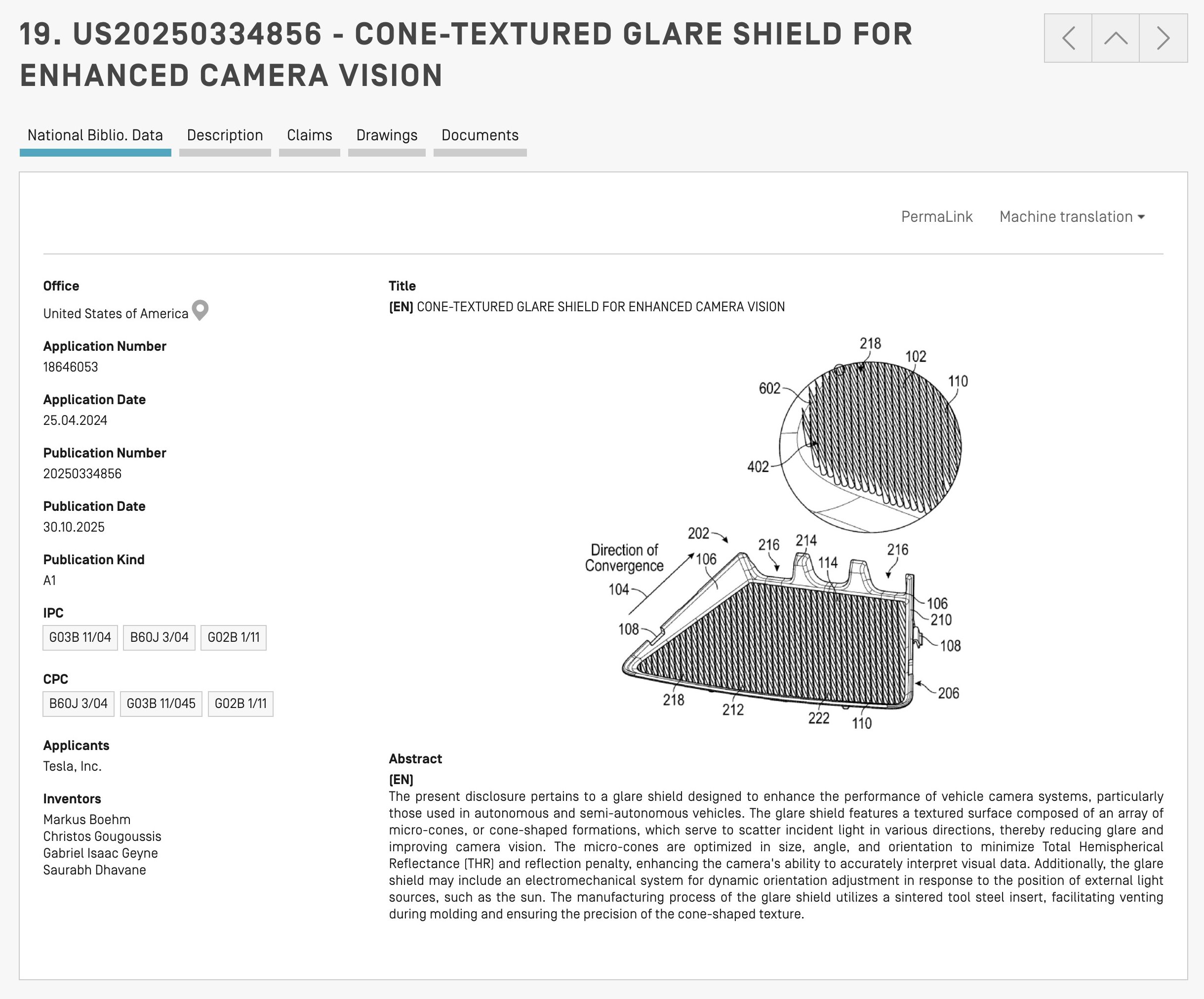
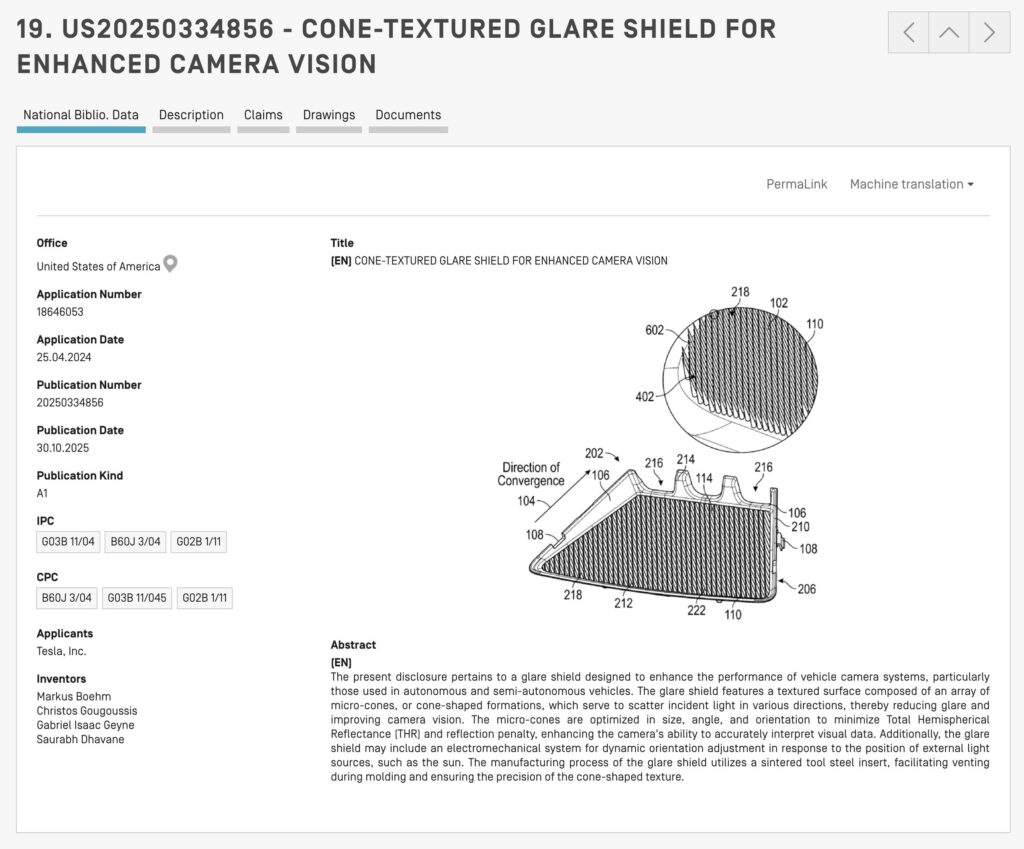
Tapping into innovative design, Tesla’s new patent outlines a sophisticated glare shield designed to prevent excessive light from reflecting into camera lenses. Departing from traditional flat designs, this new shield boasts a textured surface engineered with an array of ‘micro-cones’ intended to scatter rather than simply block incident light.
Understanding the Micro-Cone Technology
The micro-cone array functions as a light diffuser, disrupting reflection by forcing light to bounce multiple times within its structure. Each bounce diminishes the light’s energy, effectively absorbing what could have become a distracting glare, potentially impairing the cameras essential for autonomous navigation.
Dynamic Adaptation to Changing Environments
Beyond static texture enhancements, the patent includes an active electromechanical system that adjusts the orientation of the glare shield in real-time. Utilizing environmental sensors, it dynamically adapts to shifting sun positions or sudden bright headlights, enhancing the vehicle’s capacity to navigate lighting extremes without interruption.
Innovations in Manufacturing and Materials
The creation of such a precise and effective glare shield is made possible through advanced manufacturing procedures. Using injection molding with specialized materials, Tesla ensures the integrity and performance of the micro-cone textures. Additionally, the option of applying an ‘ultra-black’ coating further enhances light absorption, optimizing sensor performance.
Implications for Fully Autonomous Driving
This pivotal development brings Tesla closer than ever to achieving reliable full self-driving capabilities. By eliminating one of the primary causes of ‘phantom braking’—a malfunction where sensors misinterpret glare as obstacles—Tesla addresses a key roadblock to safe autonomous travel. It promises a future where cars can navigate automatically, regardless of the sun’s position or seasonal challenges.
The Future of Tesla Vision
Looking ahead, this breakthrough could redefine the boundaries of autonomous driving. Tesla’s ability to reduce the ‘Total Hemispherical Reflectance’ effectively gives its fleet a superior edge in ambient light management. As the technology becomes integrated into production models, we may soon witness vehicles navigating on their own through the glare and snow that once blinded them.
For the UK, a region notorious for its variable weather, such advancements could markedly boost public confidence in autonomous tech. As Tesla continues to push the envelope, the promise of safe, fully autonomous travel remains on a rapidly approaching horizon.