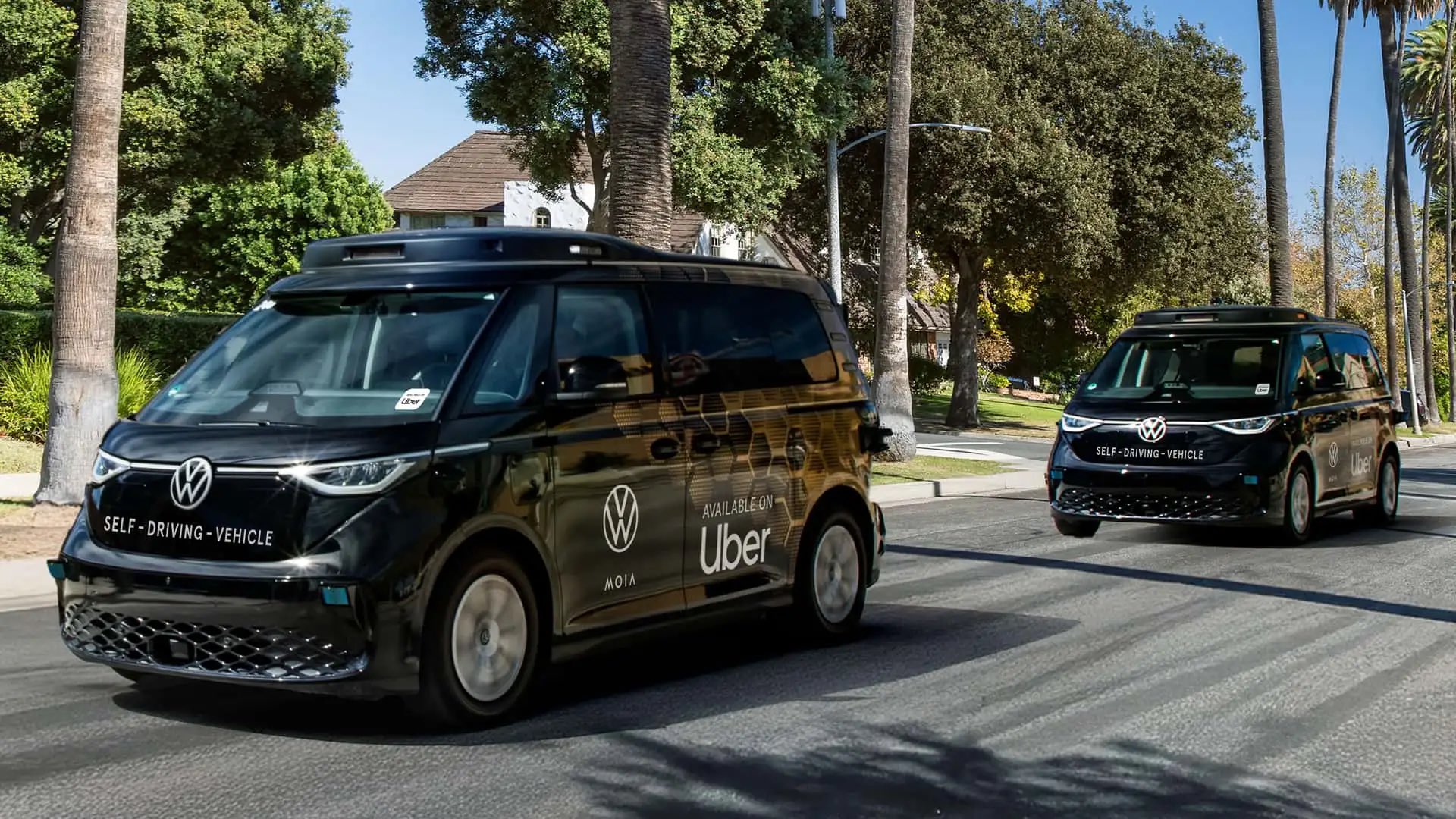
Mobileye’s Vision-Driven Future: A World Without LiDAR
In a significant shift within the autonomous vehicle industry, Mobileye, a leading supplier of technologies for advanced driver-assistance systems (ADAS) and autonomous vehicles, has announced an ambitious plan to omit LiDAR technology from its future offerings. Instead, the company aims to rely solely on vision and 4D imaging radar, contingent on the data proving its safety.
The Role of LiDAR in Autonomous Driving
Historically, LiDAR (Light Detection and Ranging) technology has been a cornerstone in the development of autonomous vehicles. By emitting laser beams and measuring the time it takes for them to bounce back, LiDAR creates accurate and high-resolution 3D maps of the vehicle’s surroundings. This capability has been crucial for navigation and obstacle detection, providing a key element to the sensor suite of most self-driving cars.
The Vision + Radar Approach
Mobileye’s move to transition away from LiDAR underscores a growing confidence in vision systems and radar technology as primary tools for autonomous navigation. Vision systems, which rely on cameras to interpret the environment in a way akin to human vision, have advanced significantly with the integration of AI and machine learning. By combining vision with 4D imaging radar, which provides a multi-dimensional view of the environment, Mobileye aims to enhance the accuracy and reliability of situational awareness while removing a complex and costly component from their systems.
Phase-out of LiDAR
The plan, as outlined by Mobileye, involves a phased reduction in LiDAR usage. Initially, the company intends to remove all side and rear-facing LiDAR sensors, retaining only a single unit at the front of the vehicle. In a subsequent phase, they propose eliminating the final remaining sensor entirely, contingent upon further validation of their vision and radar-only approach. This incremental approach is expected to provide sufficient data to validate the new setup’s safety and efficacy.
AI, Machine Learning, and the Future of Sensing
The decision to potentially remove LiDAR reflects broader trends within the industry that favor solutions offering scalability and cost-effectiveness. Advanced vision systems powered by sophisticated AI algorithms are increasingly capable of accurately interpreting complex driving environments. Moreover, the integration of machine learning technologies enables these systems to improve over time, learning from diverse scenarios encountered across millions of miles in real-world conditions.
Challenges and Implications
While the advantages of a vision and radar-centric approach are clear, several challenges remain. These include ensuring that systems can perform reliably in adverse weather conditions, where vision systems may struggle, or in situations where precise distance measurements are critical. Additionally, the implications for safety regulations and public trust must be carefully considered. The industry’s ongoing dialogue with regulators and continued public engagement will play crucial roles in the broader acceptance of these technological shifts.
A New Era of Autonomous Mobility
Mobileye’s strategy marks a pivotal moment in the journey toward fully autonomous vehicles, illustrating a profound confidence in the technologies that drive vision and radar systems. As the company forges ahead, the success of this initiative could redefine the fundamental architecture of self-driving cars, potentially steering the industry toward a more efficient, scalable, and cost-effective future.
As this transition unfolds, the automotive world, particularly in the UK with its burgeoning tech-driven transport initiatives, will be watching closely to assess the implications and potential integration of these advancements into the broader mobility landscape.