Navigating Paris with Tesla’s FSD: A New Era in Autonomous Driving
The bustling streets of Paris are a challenging environment for any driver, with narrow lanes, pedestrian crossovers, and bustling tourist hotspots. However, Tesla’s Full-Self Driving (FSD) system is proving to be a game-changer, potentially redefining our concept of autonomous transportation in complex urban landscapes.
The Future of Self-Driving: Learning from Real-World Experiences
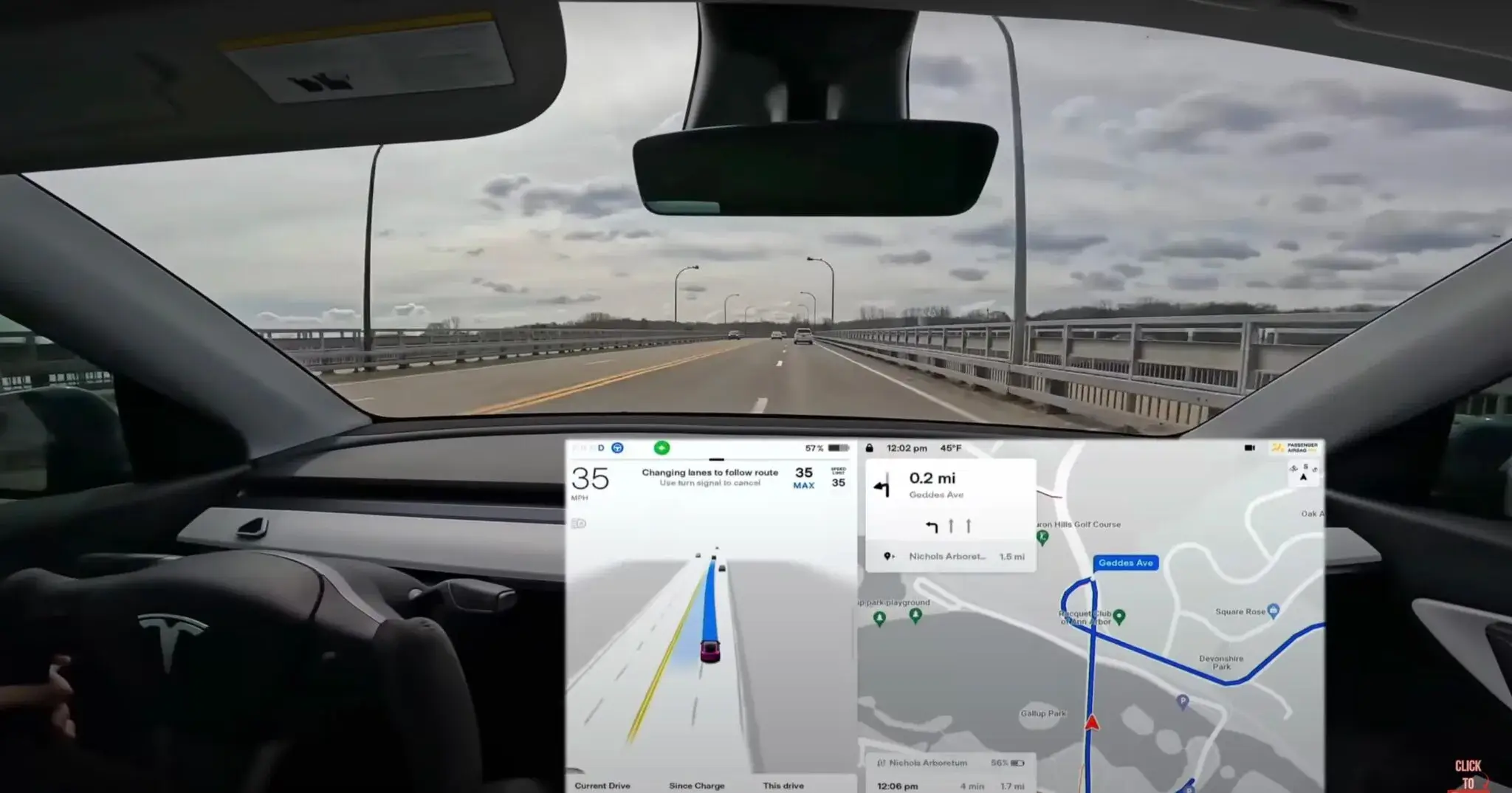
A recent supervised ride-along with Tesla’s FSD in Paris showcased how advanced the technology has become. While not without its minor pitfalls, such as a hesitant stop at a crosswalk and cautious reactions to pedestrian activity, the overall experience was astonishingly smooth and safe. These experiences, though needing slight refinements, hint at a promising future for autonomous urban mobility.
Enhancing Human Driving Through Technology
In traditional driving scenarios, navigating through dense tourist areas or pausing for unpredictable pedestrians can be taxing and error-prone. Yet, the FSD system navigated these challenges with minimal disengagements, suggesting a level of skill approaching — and in some cases exceeding — that of human drivers. Its ability to predict pedestrian behavior and react instantaneously stands out as a significant leap forward.
Autonomy with a Safety Net: The Role of Supervised Driving
The current implementation in Paris is still under supervision, indicating the practicality of a cautious rollout approach. The presence of a human supervisor ensures safety in unexpected situations, such as when the FSD hesitated at a green light. This supervised configuration permits the FSD to learn and adapt within a safe context, further refining its operations for future unsupervised scenarios.
Paris as a Unique Testing Ground
Paris, with its unique blend of modern streets and historic thoroughfares, offers an ideal testing ground for autonomous vehicles. The FSD’s adaptability in this complex environment underscores its ability to handle various urban challenges, from handling erratic tourist behavior to predicting when a motorcycle might opt to overtake.
Surpassing Human Expectations
Beyond its cautious nature, the FSD’s performance sometimes seemed almost prescient, exhibiting a degree of understanding that manifested, for instance, by predicting a pedestrian’s intention to cross or accommodating faster-moving traffic. This capability indicates a sensitive balance between safety and assertiveness, which is integral to creating an efficient autonomous driving system.
The telemetric data collected during such drives is crucial for ongoing development, ensuring that FSD systems evolve into fully autonomous vehicles capable of navigating the world’s most intricate street networks without human intervention.
Looking Ahead: The Road to Unsupervised Autonomy
While the system still requires occasional driver input, such as a tap on the accelerator at a confusing green light, these instances are becoming rarer. For Tesla’s FSD to move to true autonomy, it needs only slight adjustments in assertiveness, especially in a city as unique as Paris. Such gradual adaptations will continue to build trust, paving the way for the eventual reality of unsupervised autonomous vehicles.
As Tesla continues to refine its FSD system, the potential benefits are enormous — significantly reducing accidents, optimizing traffic flow, and ultimately redefining how we interact with our vehicles in complex urban environments. The future of autonomous driving is not just on the horizon; it’s navigating the streets of Paris, proving its mettle, one careful maneuver at a time.