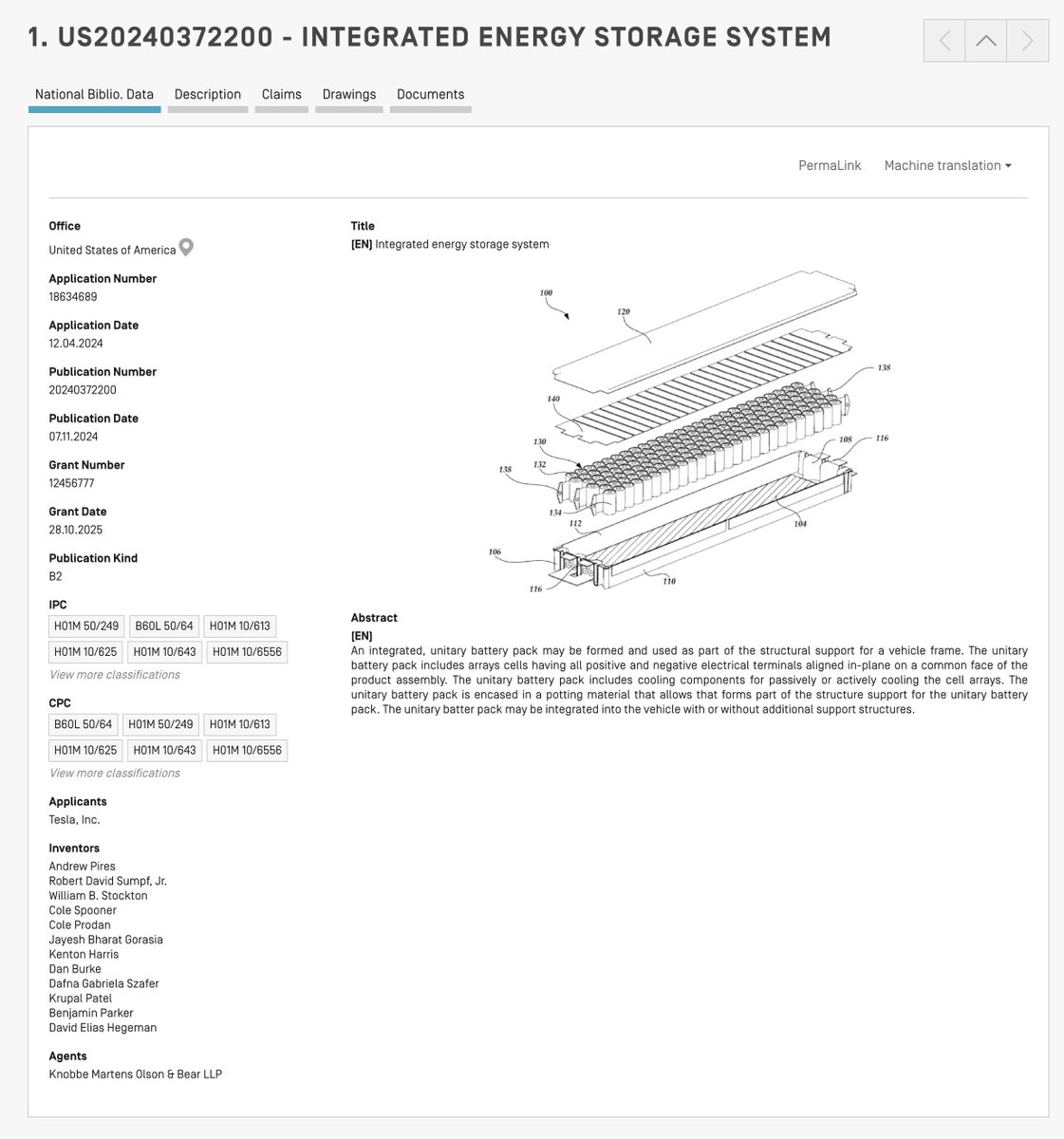
Revolutionizing Electric Vehicles: Tesla’s Unconventional Battery Architecture
In the ever-evolving landscape of electric vehicles, Tesla has once again set the stage for revolutionary innovation. With the introduction of a groundbreaking patent on October 28, 2025, Tesla unveils an unconventional battery architecture that challenges traditional automotive engineering. This article dives deep into how Tesla plans to reshape the fundamentals of electric vehicle design by integrating the battery not as a mere component, but as the very backbone of the vehicle’s structure.
The Battery as the New Backbone
The conventional electric vehicle (EV) has long been built around the idea of a separate battery unit, much like the standalone fuel tank of internal combustion engine vehicles. Traditional constructs involved heavily building a steel frame that accommodates the battery as cargo beneath. Tesla’s novel approach, however, completely reimagines this setup. By designing a composite “sandwich” chassis where the battery cells form a structural honeycomb, Tesla effectively removes the conventional need for a separate floor panel.
This transformation is not just a matter of eliminating redundant materials; it’s about redefining the battery’s role from supportive energy storage to an integral structural component. Tesla’s patent describes a unit where vertically arranged cells are bonded together with structural adhesive, creating an ultra-rigid honeycomb that can endure road forces comparable to traditional vehicular frames.
Engineering Feats: From Laser-Welded Interconnects to Smart Thermal Management
One of the standout features of this patent is the application of laser-welded ‘shingled’ interconnects. Tesla’s configuration places both electrical terminals on the cell’s top, allowing for a streamlined conductive foil sheet to connect them. This innovation drastically reduces heat and electrical resistance, simplifying the network of connections typically seen in EV designs.
The patent also reimagines thermal management. By relocating cooling systems from beneath the battery to the sides using the innovative “U-FLOW” cooling manifold, Tesla ensures even temperature distribution. This lateral approach not only maintains efficiency but also minimizes the risk of leakage by keeping liquid systems away from sensitive electrical connections.
Unveiling the Resilient Resin: More than Just Adhesive
The potency of Tesla’s design is enhanced by a unique high-strength epoxy resin. Far from being a mere adhesive, this resin affirms the pack’s structural integrity, allowing cells to function as load-bearing elements and contributing to the vehicle’s overall robustness. The resin also acts as a fire-suppressant, filling voids within the pack to deprive potential fires of oxygen, providing a dual safety mechanism by functioning as both a structural and protective element.
Safety Innovations and Energy Dispersal
Safety is non-negotiable in Tesla’s new battery architecture. The use of a “low-backpressure” mineral-based sheet serves as a protective yet sacrificial layer designed to shatter and vent potential internal gas buildups downwards, away from occupants. Coupled with the lid acting as an insulative barrier, these measures create a reinforced defensive structure that efficiently redirects energy away from the passenger cabin during malfunctions.
Paving the Road for Automotive Giants
Tesla’s pioneering technology not only marks a significant leap in electric vehicle efficiency but also sets a startling precedent for the automotive industry. With structural batteries that act as the primary skeleton of the car, Tesla delivers on promises of reduced manufacturing costs and heightened operational range. As this transformative technology takes root, competitors are likely to encounter substantial challenges in replicating Tesla’s efficiency without substantial investment in both technology and manufacturing processes.
As with past Tesla innovations, the introduction of this unitary battery component further solidifies the company’s reputation as a leader in automotive engineering. The future of electric vehicles is not just electric; it’s structurally redefined, thanks to Tesla’s commitment to innovation.