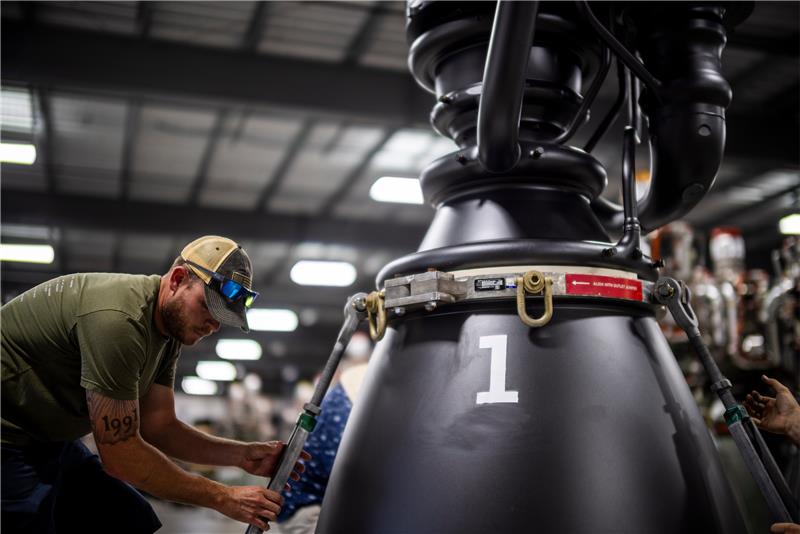
SpaceX Unveils Raptor 3: The Pinnacle of Rocket Engine Technology
SpaceX, the industry leader in space exploration, has once again pushed the boundaries of innovation with its latest release: the Raptor 3 rocket engine. This groundbreaking engine represents the pinnacle of rocket technology and promises to redefine space travel as we know it.
Revolutionary Thrust and Efficiency
One of the most remarkable features of the Raptor 3 is its unparalleled thrust capability. It boasts almost double the thrust of its predecessor, the Raptor 1, making it a titan in the realm of rocket engines. Such power is not just for show but is critical for propelling future missions into deeper space and achieving more ambitious goals in extraterrestrial exploration.
Despite this significant enhancement in performance, the Raptor 3 ingeniously maintains a cost efficiency by being four times less expensive than the previous model. This economic advantage makes it an attractive option for future missions, aligning with SpaceX’s vision to make space travel more accessible.
Weight Reduction and Design Innovations
The Raptor 3 is also a marvel of engineering when it comes to weight management. The engine is much lighter, saving a substantial 2,425 pounds per engine. Over a full launch with 39 engines, this accumulates to a massive weight reduction of 94,575 pounds (42.9 metric tons). This decrease in weight not only improves fuel efficiency but also allows for more payload capacity, offering significant advantages for scientific and commercial payloads.
Additionally, the engine’s design has been optimized for manufacturability, a strategic move that simplifies production processes and reduces time to deployment. For a company whose mission includes the colonization of Mars, this capability is essential for scaling operations effectively.
Innovative Structural Design
Ridding the need for a heat shield, the Raptor 3’s design enhancements contribute to its lightweight nature. The absence of a heat shield simplifies the engine’s structure and further reduces costs associated with materials and maintenance. This decision echoes SpaceX’s commitment to smart engineering choices that ensure both performance and practicality.
Excitement Builds for Starship Version 3
The anticipation for the Raptor 3 is tied closely to the upcoming launch of Starship Version 3, which is scheduled to make its debut in the first quarter of 2026. This next-generation spacecraft will be equipped with the Raptor 3, marking a significant milestone in SpaceX’s timeline. The synergy between Starship Version 3 and the Raptor 3 engine represents a new era of space exploration potential.
With these advances, SpaceX is setting the stage for more ambitious missions, including potential moon and Mars landings. The Raptor 3 doesn’t just symbolize a new chapter in rocket technology; it embodies the relentless human pursuit to reach beyond our terrestrial limits.
As SpaceX continues to pave the way for revolutionary space travel, the world watches with bated breath to see where this indomitable journey will lead us next.
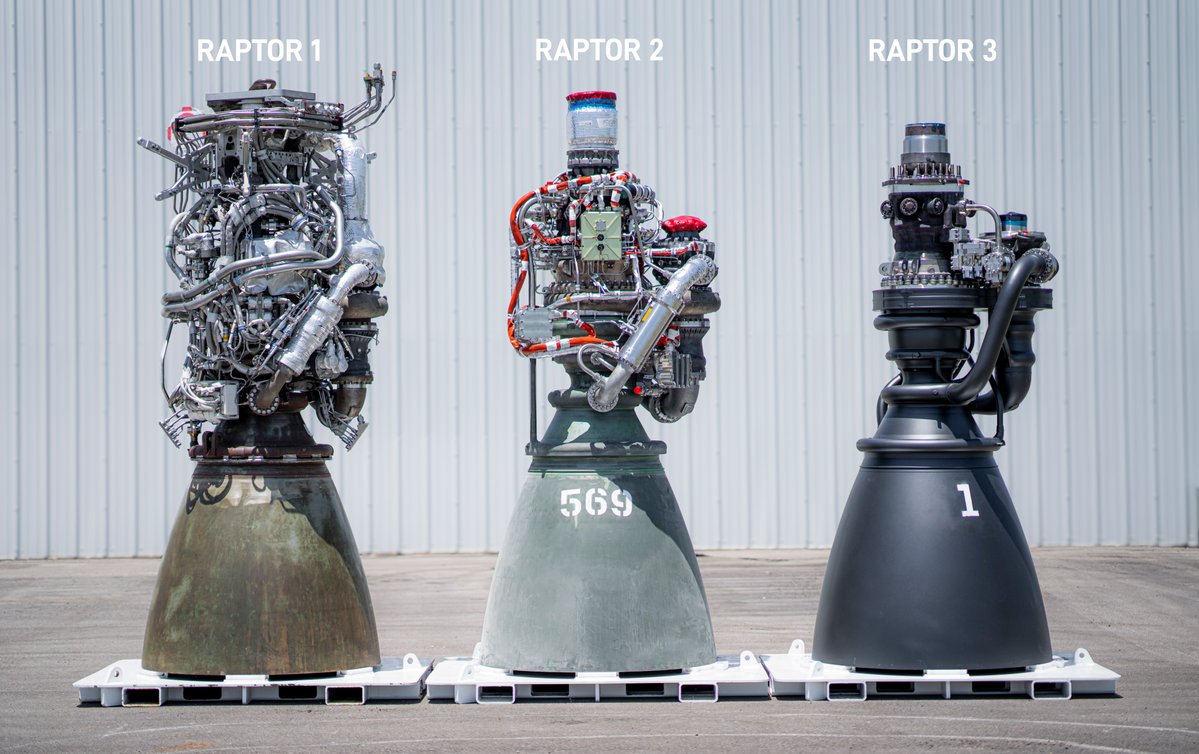
Comparative Table: Evolution of the SpaceX Raptor Engine
| Feature | Raptor 1 (2019) | Raptor 2 (2022) | Raptor 3 (Dec. 2025) |
| Sea Level Thrust | 185 tf (1.81 MN) | 230 tf (2.26 MN) | 280 – 300 tf (2.94 MN) |
| Chamber Pressure | 270 – 300 bar | 300 bar | 350 bar (World Record) |
| Specific Impulse (Isp) | 350 s (vac) | 347 s (vac) | 350 s (Target 380s for Vac) |
| Engine Mass (Dry) | ~2,080 kg | ~1,630 kg | ~1,525 kg |
| Total System Mass* | ~3,630 kg | ~2,875 kg | ~1,720 kg |
| Thrust-to-Weight Ratio | ~90 | ~141 | ~184 – 200+ |
| Design Strategy | External plumbing, sensors, and heat shields. | Simplified, integrated electronics. | Minimalist “Naked” design, internal plumbing, no heat shield. |
Conclusion: The Raptor 3 Era and the Future of Space Exploration
As of December 2025, the Raptor 3 represents more than just a technical upgrade; it is a paradigm shift in aerospace engineering through “design by subtraction.” By leveraging additive manufacturing (3D printing) to internalize secondary flow paths and cooling channels, SpaceX has achieved a feat once thought impossible: increasing thrust by over 50% while simultaneously halving the external complexity.
Key Implications for 2026 and Beyond:
- Starship V3 (Block 3) Dominance: Armed with 33 Raptor 3 engines delivering a staggering 9,000+ tons of liftoff thrust, the Super Heavy booster is set to achieve a fully reusable payload capacity of over 200 metric tons to Low Earth Orbit.
- Rapid Reusability: The “naked” design—devoid of fragile external plumbing and the need for heavy engine heat shields—dramatically reduces the inspection and maintenance time. This is the “secret sauce” for the high-frequency launch cadence required by NASA’s Artemis missions.
- Unprecedented Cost Efficiency: By simplifying the manufacturing process and maximizing payload, SpaceX is closing in on the industry’s “holy grail”: reducing the cost of access to space to under $10 per kilogram.
In conclusion, the Raptor 3 is the engine that transforms the Starship from a prototype into a reliable industrial workhorse. It is the definitive piece of the puzzle that makes a permanent human presence on the Moon—and eventually Mars—not just a vision, but an economic and logistical reality.