Tesla Challenges in the UK: Navigating Sales and Market Share Fluctuations
In the latest automobile market analysis from the UK, Tesla’s sales figures and market presence have showcased notable fluctuations. The report on Tesla’s performance in October reveals significant insights into the broader dynamics of the electric vehicle (EV) market in the UK.
Decline in Monthly Sales
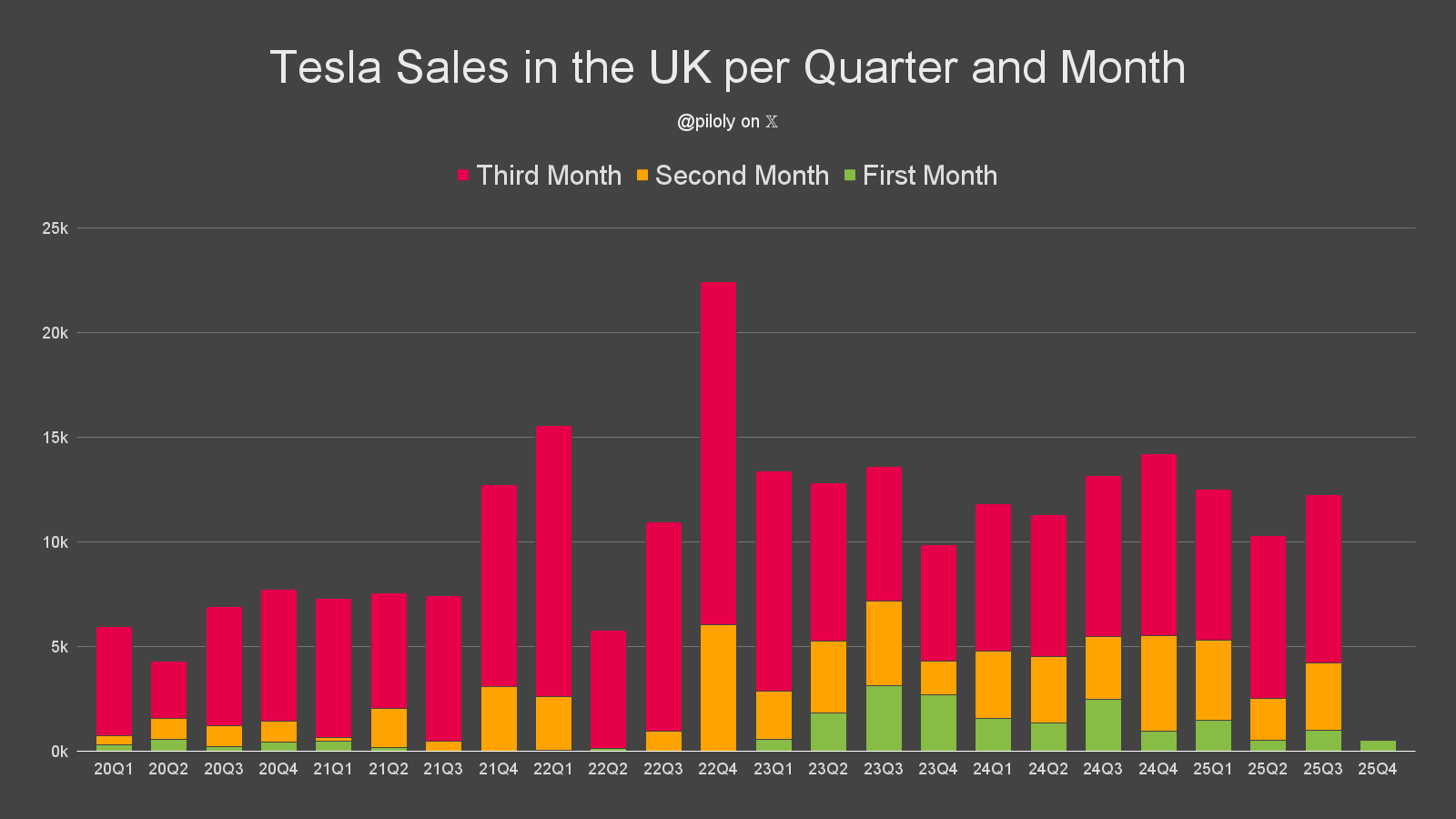
According to recent data, in October, Tesla reported a total of 511 vehicle sales, constituting a mere 0.4% of the overall market share. Notably, this reflects a substantial 47% decrease compared to October of the previous year and a 48% decline in comparison to July, which marked the first month of the third quarter last year. These figures highlight a challenging period for Tesla within the UK’s automotive landscape.
BEV Market Penetration
Despite the drop in sales, the UK continues to experience a strong surge in Battery Electric Vehicle (BEV) penetration, reaching an impressive 25.4%. Within this segment, Tesla maintains a 1.4% share, showing that the company still holds a significant position even amidst market pressures. This penetration rate illustrates the increasing demand and adaptation to BEV technology, albeit presenting competitive challenges for Tesla.
Quarterly and Year-to-Date Performance
Over the last three months, Tesla’s sales have increased by 9.6% compared to the period from May to July, indicating a positive trajectory despite the declines in individual months such as October. On a year-to-date basis, Tesla’s sales have decreased by 5% compared to the same period last year. However, by the end of October, Tesla achieved 70% of last year’s total sales, suggesting a partially successful recovery and an expectation of reaching or possibly exceeding last year’s figures by the end of 2023.
Strategic Implications and Market Outlook
The data underscores the need for strategic repositioning for Tesla as it navigates the complexities of the UK market. With increasing competition in the BEV sector from traditional automotive giants and emerging EV manufacturers, Tesla must enhance its market strategies and possibly introduce newer models or incentives to regain customer interest and boost sales. This scenario also suggests potential shifts in consumer preferences, as buyers increasingly prioritize efficiency, innovation, and affordability in their EV choices.
As Tesla evaluates its UK strategy, it highlights broader industry trends, including the shifting market dynamics and consumer leanings toward eco-friendly and technologically advanced vehicles. The coming months will determine how effectively Tesla capitalizes on these trends, adapts its offerings, and maintains its position in the competitive EV market.
Final Thoughts
Tesla’s journey in the UK this past October reflects both the potentials and challenges that face automotive companies in a rapidly evolving market landscape. While short-term setbacks in monthly sales figures pose challenges, Tesla’s ability to recover and respond strategically is vital. As the year progresses, the focus will be on how Tesla leverages its brand and technological prowess to fortify and potentially expand its market share in the vibrant UK EV sector.