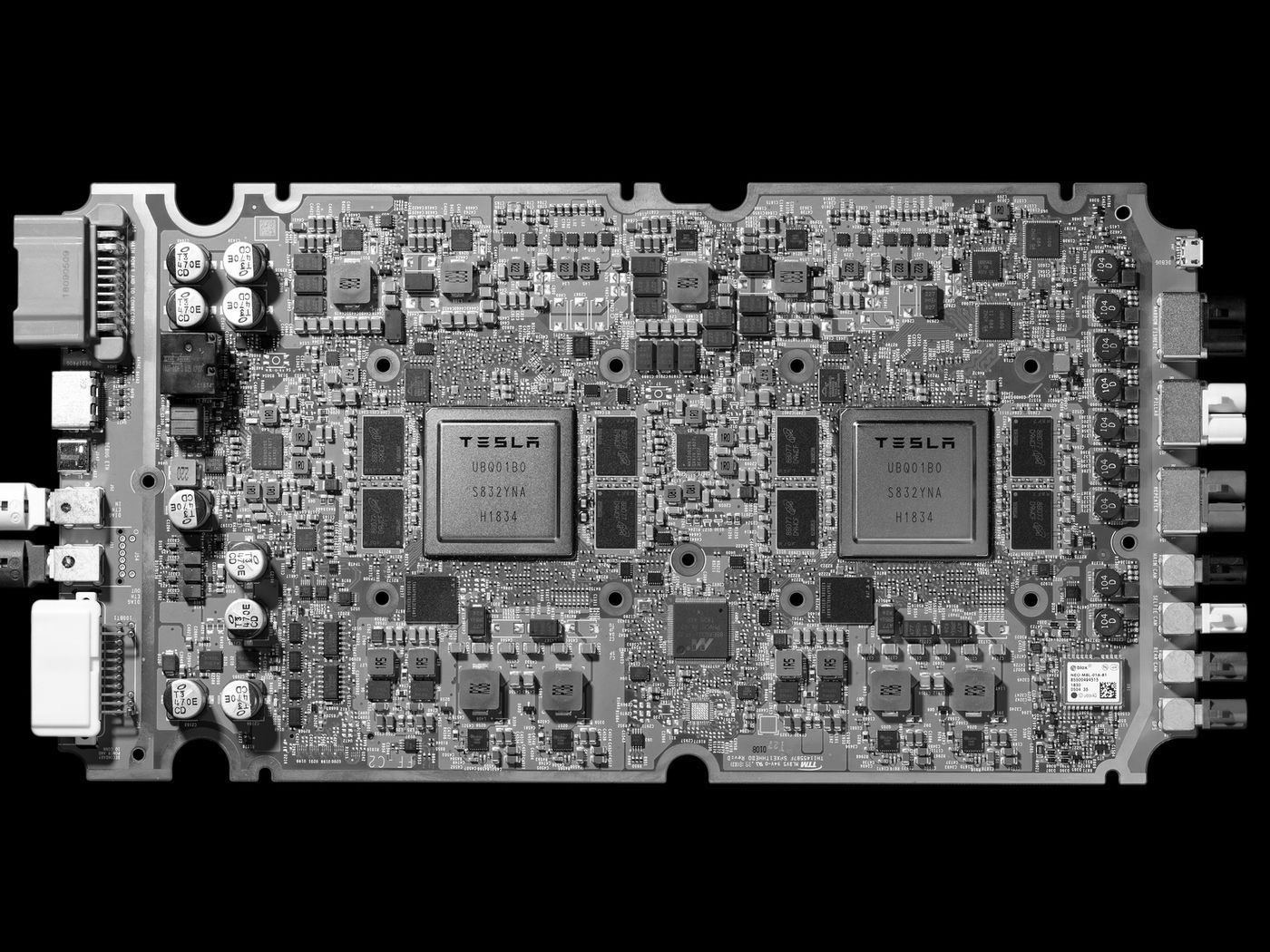
Tesla’s AI5 Chip: Revolutionizing the Future of Autonomous Driving
Tesla’s relentless innovation continues to pave the way for groundbreaking advancements in autonomous vehicle technology. The confirmation by Elon Musk that the design review for Tesla’s cutting-edge AI5 chip is complete marks a pivotal moment in the progression of Full Self-Driving (FSD) systems.
AI5 Chip Design: A Leap Towards Superior Performance
The forthcoming AI5 chip is envisioned to significantly enhance the processing capabilities required for Tesla’s ambitious autonomous driving goals. By employing state-of-the-art architectures, this chip is expected to boost the computational speed and efficiency far beyond its predecessors.
Unlike previous iterations, the AI5 chip focuses heavily on optimizing energy consumption and maximizing processing power. This leap in technology not only promises more reliable and responsive FSD systems but also positions Tesla as a leader in AI-driven automotive solutions.
Implications for Full Self-Driving Technology
The refinement in chip technology is poised to address several longstanding challenges in FSD. The AI5 chip’s advanced algorithms are designed to improve vehicle perception, decision-making, and control dynamics. These improvements are crucial for the seamless integration of self-driving cars into existing traffic ecosystems.
Furthermore, the chip enables more sophisticated neural network training, thus allowing Teslas to handle complex real-world scenarios more adeptly. The advanced processors can accommodate greater data inputs, facilitating enhanced learning and adaptability.
Market Impact: Reinforcing Tesla’s Technological Edge
As the UK gears up for an era where autonomous vehicles are part of daily life, Tesla’s advancements in AI technology fortify its competitive advantage. The AI5 chip is not just a technical innovation; it represents Tesla’s strategic push towards reshaping transportation paradigms.
This technological edge means greater market dominance, potentially influencing regulatory aspects and paving the way for widespread adoption of driverless technology. Increased consumer confidence in Tesla’s autonomous driving capabilities could accelerate this transition.
Future Prospects and Expectations
Looking ahead, the AI5 chip is likely to catalyze further developments in transportation AI. Its deployment underscores a future where Tesla not only meets but anticipates the demands of modern urban mobility. The adaptability ingrained in the chip’s architecture ensures that it remains relevant, potentially adapting to future updates seamlessly.
For the UK audience, these advancements promise increased safety, reduced traffic congestion, and a move towards an environmentally sustainable transportation model. As such, Tesla continues to capture the imagination of automotive enthusiasts and industry experts alike.
In conclusion, the completion of the AI5 chip’s design is a testament to Tesla’s innovative spirit and a foretaste of the significant shifts anticipated in the autonomous vehicle landscape. These developments highlight Tesla’s pivotal role in spearheading the evolution of automotive technology on a global scale.