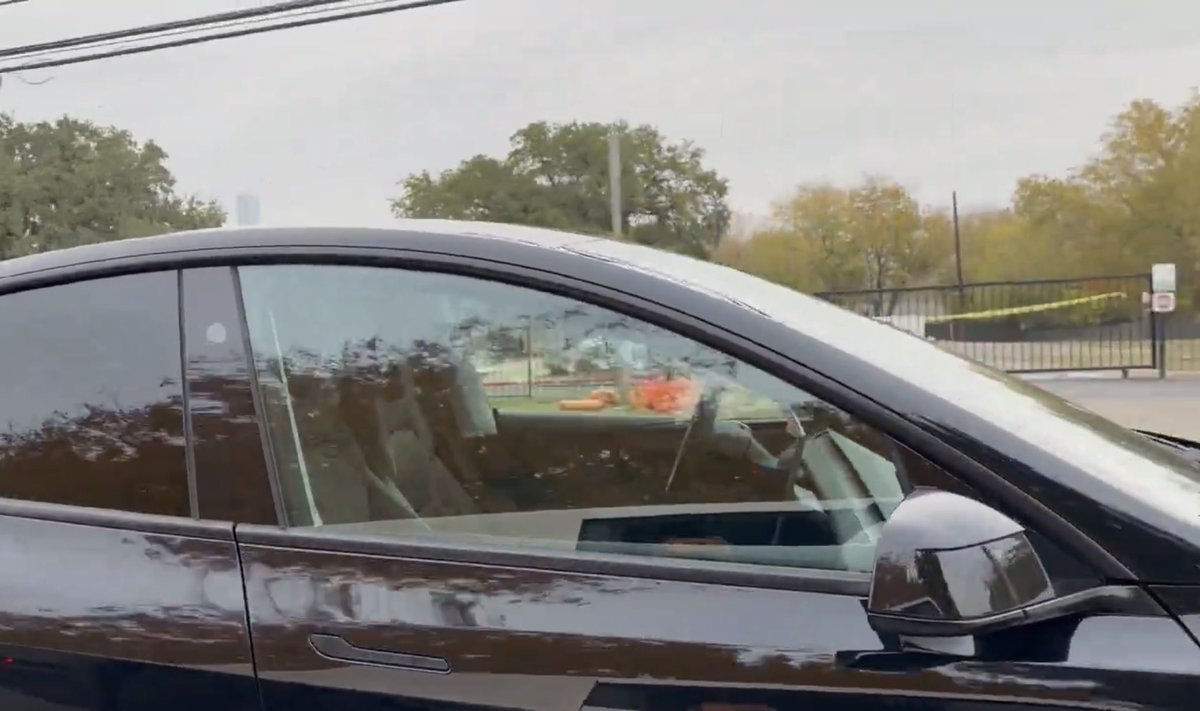
Elon Musk confirms that Tesla is currently testing Robotaxis with no one in the front seats
In a groundbreaking development, Tesla is pushing the boundaries of autonomous driving technology by testing Robotaxis without drivers in the front seats. This bold move by the electric vehicle giant is setting a new standard in the self-driving car industry, highlighting the potential for a future where human drivers are entirely optional.
The Vision Behind Driverless Robotaxis
Elon Musk, Tesla’s CEO, has long been an advocate for autonomous vehicles and has consistently spoken about his vision for a future free of human-driven cars. The current testing phase of Tesla Robotaxis represents a significant step towards realizing this vision. Tesla’s Robotaxis, equipped with advanced AI and machine learning algorithms, are designed to navigate urban landscapes, manage traffic conditions, and ensure passenger safety without human intervention.
Technological Foundations of Tesla’s Robotaxis
Tesla’s Robotaxis are built on the foundation of the company’s Full Self-Driving (FSD) technology, which has been in development for several years. The FSD system uses a network of sensors, cameras, and radar technology to create a comprehensive map of the environment, enabling the vehicle to make data-driven decisions in real-time. This sophisticated system is pivotal in supporting the novel driverless capability of Tesla’s Robotaxis.
Regulatory and Safety Considerations
While the technology is undoubtedly impressive, the introduction of driverless taxis raises significant regulatory and safety concerns. Governments worldwide are grappling with how to regulate these autonomous vehicles and ensure public safety. Tesla is working closely with local and international authorities to adhere to safety regulations and standards, demonstrating the viability and safety of its Robotaxis before large-scale deployment.
Economic and Environmental Impact
The widespread adoption of Tesla’s Robotaxis has the potential to radically transform urban transportation. By reducing the reliance on personal vehicles, these autonomous taxis could diminish traffic congestion and reduce urban pollution. Moreover, the shared ride model of Robotaxis could lead to significant cost savings for consumers, making transportation more accessible and affordable.
Challenges and the Road Ahead
Despite the promise and excitement surrounding Tesla’s Robotaxis, numerous challenges remain. Public trust and acceptance of fully autonomous vehicles are critical hurdles that Tesla must overcome. Additionally, the technology must prove itself in a wide range of scenarios, including adverse weather conditions and complex urban traffic environments.
In conclusion, Tesla’s testing of driverless Robotaxis signifies a monumental leap towards a future where human oversight may no longer be a requirement for vehicle operation. As Tesla continues to refine its technology and address regulatory and public acceptance issues, the dream of autonomous urban mobility inches closer to reality.
Stay tuned as Tesla continues to innovate and push the boundaries of what is possible in the realm of autonomous vehicle technology.