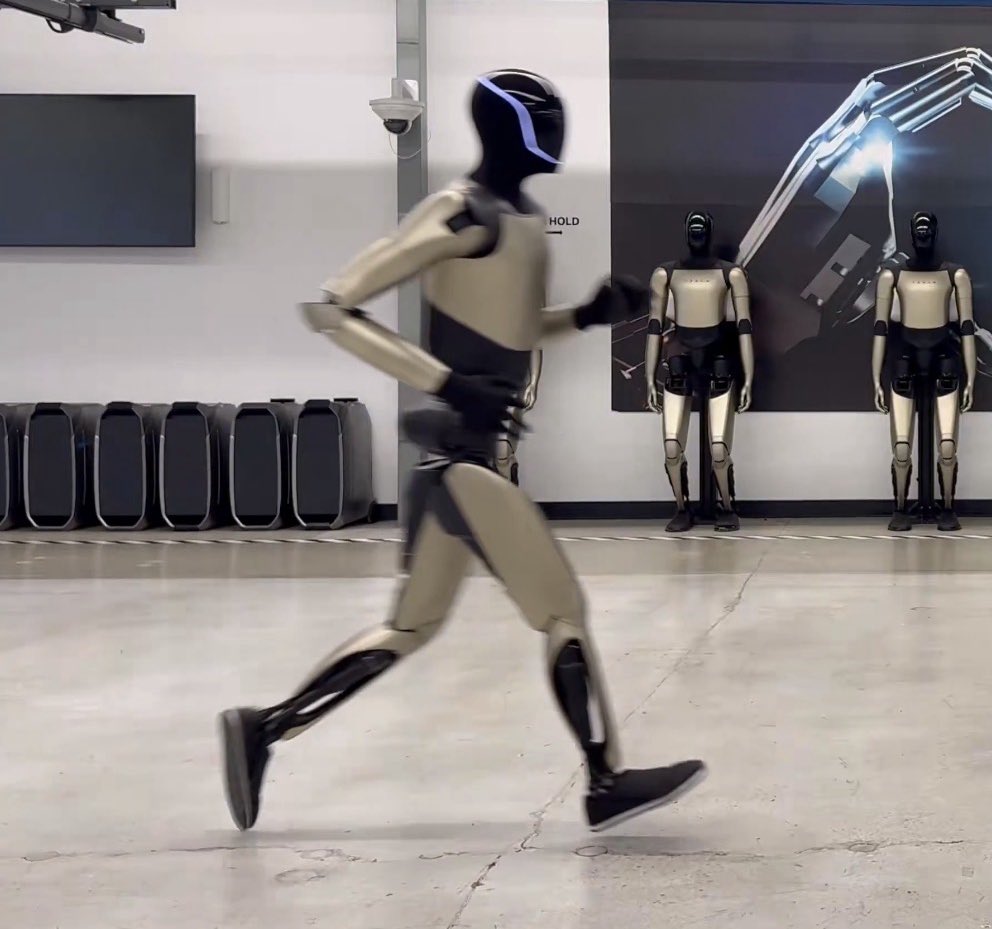
The Advanced Mechanics Behind Tesla’s Bipedal Robotic Running
As robotics become an increasingly integral part of modern technology, the development of functional bipedal robots stands as one of the most fascinating challenges. Tesla Optimus, the latest endeavor by Tesla in the robotic domain, is pushing the boundaries by incorporating a feature that has eluded robot engineers for decades: bipedal running. This capability is not just about speeding up movement but involves a complex set of mechanical and software innovations.
The Intricacies of Bipedal Motion
Implementing bipedal running in robots like the Tesla Optimus involves navigating a minefield of mechanical requirements and dynamic skills. Unlike wheeled robots, bipedal robots must replicate human running’s unique demands. These include maintaining balance, achieving suitable speed, absorbing shock, and ensuring consistency in motion.
1. Speed and Dynamics
For a bipedal robot to run, it must achieve a minimal speed threshold. The legs must move in a synchronized yet dynamic pattern, creating a balance between thrust and air time. This involves complex algorithms that predict and adjust the leg motion in real-time, ensuring the robot doesn’t topple over, and can smoothly transition between strides.
2. The Leap Factor
A crucial component of the running mechanism is executing a small jump with each stride. This ‘airborne’ phase, however brief, is critical. It facilitates faster, more energy-efficient movement. Tesla Optimus incorporates specialized sensors and gyroscopes to maintain balance during these airborne phases, minimizing the risk of falls.
Balance and Smoothness in Robotic Design
Balance and smoothness are perhaps the most challenging aspects of bipedal robotic running. The continual adjustments required to keep the robot upright and its movements seamless have led to breakthroughs in AI and sensor technology.
1. Sensor Integration
Advanced sensors feed data into the robot’s brain, helping it make split-second decisions. Tesla Optimus uses a combination of accelerometers, gyroscopes, and vision sensors to map its environment and adapt its movement accordingly. This integration is crucial for the robot to react dynamically to unanticipated obstacles or changes in terrain.
2. AI and Machine Learning
Machine learning algorithms play a fundamental role in teaching the robot to adapt its movements based on past experiences. By analyzing data collected from each trial session, the algorithms refine and perfect the running sequence, improving the efficiency and safety of bipedal locomotion.
Shock Absorption and Consistency
Successfully replicating human-like running also entails mastering the art of **shock absorption** and maintaining consistency over time.
1. The Role of Materials
The materials used in **Tesla Optimus** are specifically chosen for their ability to absorb impact without losing strength. The design incorporates flexible joints and compliant materials to mimic the natural cushioning effect found in human muscles and tendons.
2. Maintaining Regularity
Consistency in movement is vital to avoid mechanical wear and potential malfunction. This is achieved through continuous monitoring and recalibration of the robot’s systems, ensuring that every stride is as stable and significant as the last.
In conclusion, the progress demonstrated by **Tesla Optimus** in achieving bipedal running is a testament to the ongoing innovations in robotics. By converging advancements in AI, materials science, and sensor technology, Tesla not only pushes the limits of what robots can do but paves the way for their future applications in industries and homes worldwide.