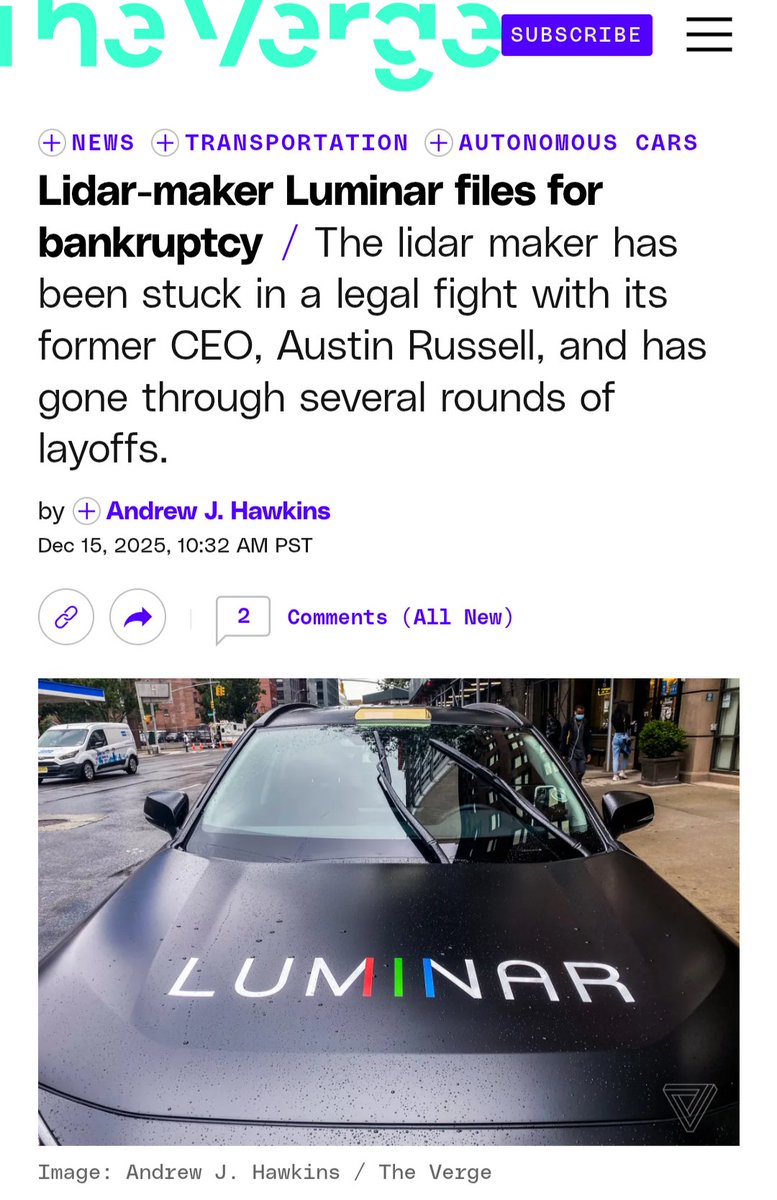
The Rise and Fall of LiDAR: Lessons from Luminar’s Bankruptcy
The technology landscape is ever-evolving, and not all players can keep pace with the rapid changes. The recent bankruptcy filing by Luminar, a trailblazer in the LiDAR industry, underscores the uncertainties and volatile nature of the self-driving vehicle market.
The Swift Rise of LiDAR Technology
LiDAR, an acronym for Light Detection and Ranging, was heralded as the cornerstone technology for autonomous vehicles. With its ability to create precise, high-resolution 3D models of the surroundings, many automotive companies considered it essential for the future of self-driving cars. Luminar was at the forefront, striking major deals with automotive giants like Volvo, Mercedes-Benz, and Audi.
Luminar’s initial success was buoyed by significant investments, and at its peak, the company was valued at nearly $3 billion. The promising technology attracted numerous car manufacturers aiming to integrate reliable and accurate sensors into their autonomous vehicle systems.
Challenges in the Self-Driving Vehicle Sector
Despite the initial excitement, the journey for LiDAR technology and its proponents has been fraught with challenges. The autonomous vehicle sector has not grown at the speed many predicted, leading to slower-than-expected adoption of LiDAR technology. This stagnation has impacted investments and development timelines, causing financial strains on companies like Luminar.
Additionally, the company’s internal struggles, including legal battles and an ethics investigation involving former CEO Austin Russell, coupled with multiple rounds of layoffs, further exacerbated its financial and operational troubles.
The Shift in Autonomous Technology Preferences
Another significant shift has been in technology preferences. While some companies embraced LiDAR, others, notably Tesla, chose to prioritize camera and software-based solutions for their autonomous vehicle systems. Tesla’s decision to eschew LiDAR in favor of its advanced neural network technology highlighted a stark contrast in the industry’s approach to achieving vehicle autonomy.
**This strategic pivot has incited an ongoing debate**: Can premier autonomous driving be achieved without the need for LiDAR technology? Is the future of autonomy more reliant on scalable software and advanced algorithms than on physical sensors?
Lessons for the Industry
As Luminar moves to sell its LiDAR and semiconductor businesses, the future of the company remains uncertain. However, its journey offers valuable lessons for technology companies navigating the self-driving vehicle industry. Success in this arena requires not only cutting-edge technology but also strong leadership, prudent financial management, and often, a willingness to adapt to changing technological landscapes.
**The fall of a once-prominent industry player** serves as a reminder of the fluid nature of technological innovation. It prompts a reevaluation of how success is defined in the fast-paced world of autonomous driving, emphasizing the importance of adaptability, foresight, and the ability to pivot when faced with market shifts.
The narrative surrounding Luminar’s rise and fall is still evolving, and as the dust settles, the industry at large will be keenly observing the outcomes and lessons derived from this pivotal moment in self-driving technology history.
Source: Original Tweet