
The Ultimate Guide to the Tesla Model Y: Range, Price, Options, and Detailed 2026 Specifications
The Tesla Model Y has quickly established itself as the best-selling electric vehicle globally, revolutionizing the crossover SUV market with its blend of performance, technology, and practicality. As we look toward the 2025 model year, the Model Y continues to evolve, incorporating minor refinements and feature updates that solidify its position as a benchmark EV. This ultimate guide breaks down everything you need to know about the 2025 Model Y, from its latest estimated range figures and pricing tiers to its intricate technical specifications and essential options.
1. The 2026 Model Y Lineup: Trims and Estimated Pricing
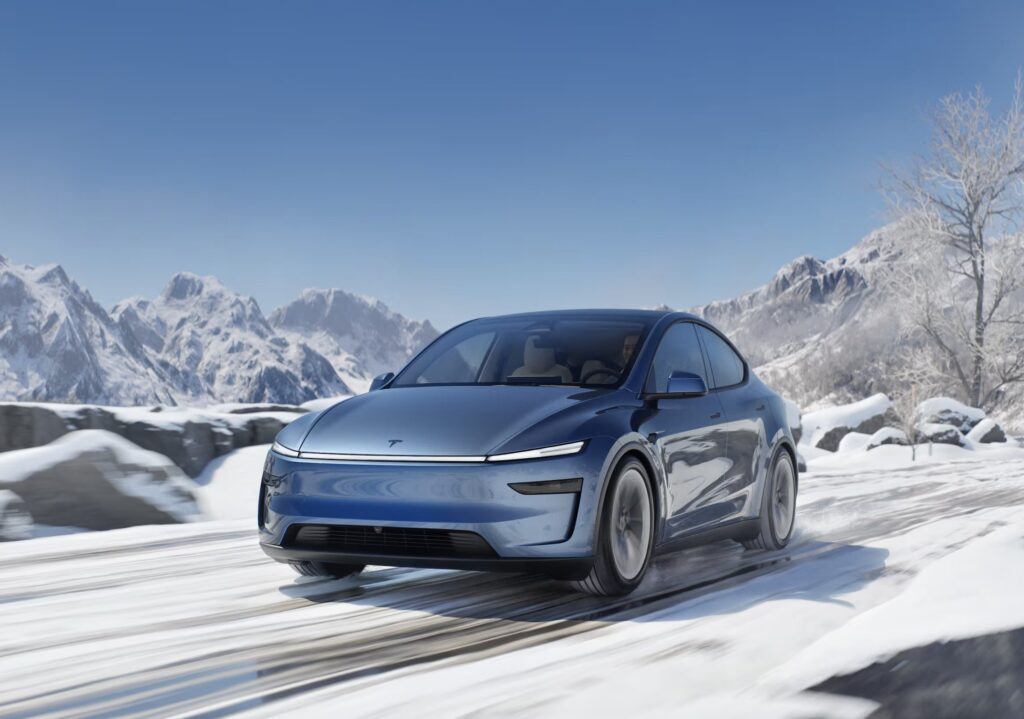
For 2025, the Model Y retains its core three-trim strategy, each designed to cater to different performance and budget needs. Note: All pricing is estimated (MSRP before potential tax credits, incentives, and destination fees) and subject to change by Tesla.
Estimated 2026 Model Y Trims and Pricing
| Trim Level | Drivetrain | Estimated EPA Range (mi) | Estimated 0-60 mph (sec) | Estimated 2025 Base MSRP |
| Model Y Rear-Wheel Drive (RWD) | Single Motor (RWD) | ~260 | 6.6 | ~$44,990 |
| Model Y Long Range (LR) | Dual Motor (AWD) | ~310 | 4.8 | ~$49,990 |
| Model Y Performance (P) | Dual Motor (AWD) | ~280 | 3.5 (with rollout) | ~$53,990 |
2. In-Depth Look at Range and Charging 🔋
Range remains the most critical factor for EV buyers, and the 2025 Model Y continues to offer highly competitive figures, especially in its Long Range variant.
A. Range Explained (EPA Estimates)
- Model Y Long Range (LR): The sweet spot for most consumers, offering an estimated 310 miles on a full charge. This balance of range and AWD capability makes it ideal for daily commuting and long-distance road trips.
- Model Y Rear-Wheel Drive (RWD): With an estimated 260 miles, this trim is perfect for city dwellers and those with predictable, shorter commutes.
- Model Y Performance (P): Its focus on speed and acceleration slightly impacts its range, estimated at 280 miles. This figure is achieved despite performance-oriented components like larger wheels and upgraded brakes.
Note on Real-World Range: Driving style, weather conditions (especially cold), vehicle load, and wheel selection significantly impact real-world range. Expect a 10-20% reduction under less-than-ideal circumstances.
B. Charging Infrastructure and Speeds
The Model Y benefits from access to the world-leading Tesla Supercharger network.
- Supercharging (DC Fast Charging): The Model Y can typically charge from 10% to 80% in about 20-30 minutes at a V3 Supercharger, adding up to 175 miles of range in just 15 minutes. Maximum charging power is typically 250 kW.
- Home Charging (Level 2 AC): Using a Tesla Wall Connector at home (240V), the Model Y can recover about 40-44 miles of range per hour, allowing for a full overnight charge.
- Standard Outlet (Level 1 AC): Only provides 2-3 miles of range per hour, useful only in emergencies.
3. Options and Customization 🎨
Tesla maintains a streamlined options list, focusing on core aesthetics and software features.
A. Paint and Interior
- Standard Paint: Pearl White Multi-Coat (included in base price).
- Premium Paints: Options include Solid Black, Midnight Silver Metallic, Deep Blue Metallic, and the signature Red Multi-Coat.
- Interior: All Black is standard. The Black and White interior is an optional upgrade, adding a sophisticated, modern contrast.
- Wheels:
- 19-inch Gemini Wheels (Standard on RWD/LR).
- 20-inch Induction Wheels (Optional upgrade on LR).
- 21-inch Überturbine Wheels (Standard on Performance).
B. Seating Configuration and Towing
- 7-Seat Interior: An optional upgrade providing a third row of seating, best suited for small children due to limited legroom.
- Tow Hitch: An optional feature enabling a towing capacity of up to 3,500 lbs (1,588 kg).
C. Autopilot and Full Self-Driving (FSD) Software
Tesla’s core differentiator is its advanced driver-assistance system.
- Autopilot (Standard): Includes Traffic-Aware Cruise Control and Autosteer (keeps the car centered in its lane).
- Enhanced Autopilot (EAP – Optional Package): Adds Navigate on Autopilot (automatic highway merging/exiting), Auto Lane Change, Autopark, and Summon.
- Full Self-Driving (FSD) Capability (Optional Package): Includes all EAP features plus Autosteer on city streets and Traffic Light and Stop Sign Control. This is Tesla’s most advanced beta software, requiring driver attention and intervention.
4. Detailed Tesla Model Y 2026 Technical Specifications ⚙️
The following tables provide key specifications for the 2025 Model Y variants.
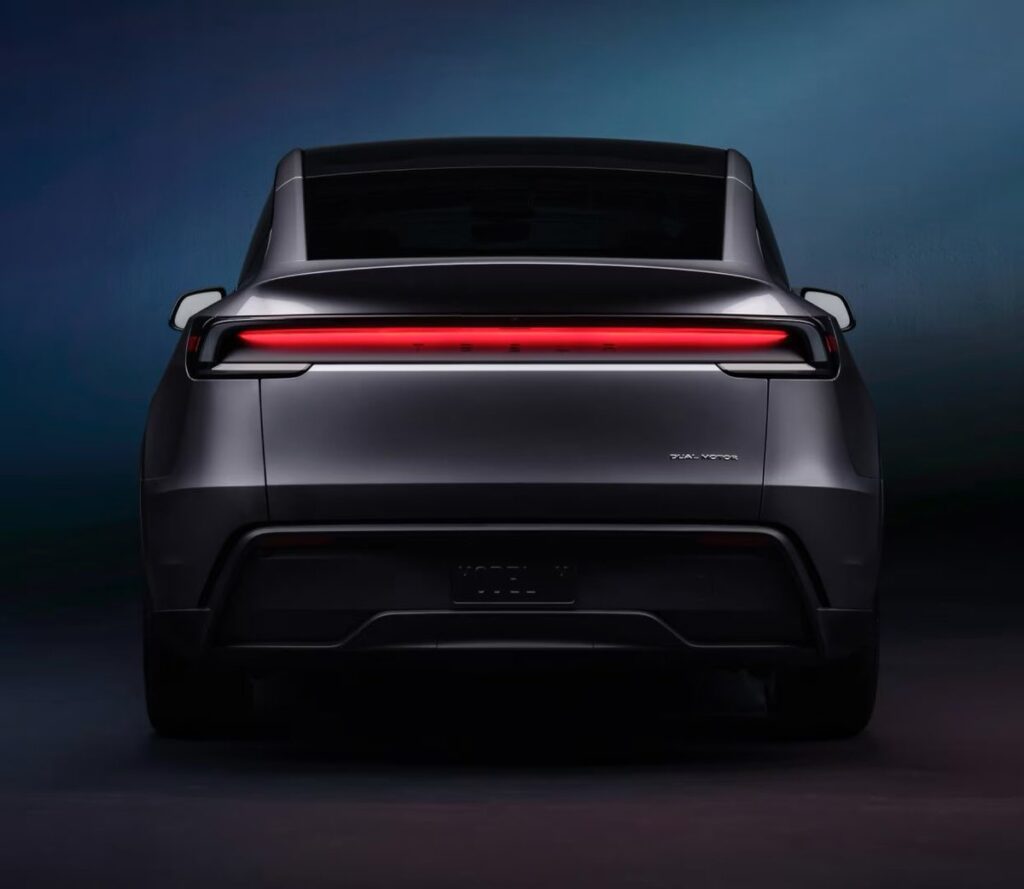
A. Performance and Drivetrain
| Specification | Model Y RWD | Model Y Long Range (LR) | Model Y Performance (P) |
| Drivetrain | Single Motor | Dual Motor | Dual Motor |
| Drive Type | Rear-Wheel Drive (RWD) | All-Wheel Drive (AWD) | All-Wheel Drive (AWD) |
| Top Speed | 135 mph | 135 mph | 155 mph |
| Peak Power (Estimated) | ~255 hp | ~384 hp | ~455 hp |
| Brakes | Standard | Standard | Performance Upgrade |
| Suspension | Standard | Standard | Lowered Suspension |
B. Battery and Charging
| Specification | All Trims |
| Battery Type | Lithium-ion (NMC/LFP depending on region/trim) |
| Battery Capacity (Estimated Usable) | ~60 kWh (RWD), ~78 kWh (LR/P) |
| Max Supercharging Rate | 250 kW |
| AC Charging Rate (Max) | 11.5 kW |
C. Dimensions and Capacity
| Specification | Details |
| Length x Width x Height | 187 in x 83.8 in x 64 in |
| Wheelbase | 113.8 in |
| Curb Weight (Estimated) | 4,200 – 4,416 lbs |
| Cargo Capacity (Total) | 76 cubic feet (with rear seats folded) |
| Frunk Capacity | ~4.1 cubic feet |
| Ground Clearance | 6.6 inches |
D. Interior Technology and Safety
| Feature | Details |
| Primary Display | 15-inch center touchscreen |
| Audio System | Premium Audio (LR/P) or Standard Audio (RWD) |
| Connectivity | Standard (8-year Basic), Premium (Trial/Subscription) |
| Safety Rating | IIHS Top Safety Pick+, NHTSA 5-Star |
| Standard Safety | Automatic Emergency Braking, Lane Departure Avoidance |
5. Driving Experience and Practicality
The Model Y is renowned for its handling and efficiency, often feeling more like a sport sedan than an SUV.
- Handling: The skateboard battery architecture
provides a low center of gravity, resulting in minimal body roll and responsive steering, especially in the Performance variant.
- Interior Ergonomics: The cabin is defined by its minimalist design, with almost all functions controlled via the 15-inch touchscreen. This provides a clean, open feel, though some drivers may miss physical buttons.
- Utility: The crossover design offers superior utility compared to the Model 3 sedan. The rear hatch opens wide for easy loading, and the total 76 cubic feet of storage (including the Frunk, or front trunk) rivals many mid-size conventional SUVs.
🤖 Autopilot and Full Self-Driving (FSD) Capabilities Explained

The software features related to driver assistance and automation are arguably the most complex and rapidly evolving aspects of the Tesla Model Y. Understanding the differences between the standard Autopilot, Enhanced Autopilot (EAP), and Full Self-Driving (FSD) Capability is crucial for potential buyers.
1. Standard Autopilot (Included)
Every Model Y comes equipped with the hardware (cameras, ultrasonic sensors, and computer) and software for standard Autopilot. This system is designed to reduce the physical burden of highway driving.
- Traffic-Aware Cruise Control (TACC): This feature matches the speed of your car to the surrounding traffic, slowing down and accelerating automatically to maintain a user-set follow distance.
- Autosteer: This actively assists in steering to keep the car centered within its lane. It requires the driver to keep their hands on the wheel and monitor the road at all times. If the system detects the driver’s hands are not providing resistance, it will issue warnings and eventually slow the car down.
2. Enhanced Autopilot (EAP) (Optional Purchase)
EAP is an optional package that significantly expands the vehicle’s capabilities beyond basic cruise control and lane-keeping, primarily focusing on automated actions on highways and parking.
- Navigate on Autopilot: This guides the car from a highway on-ramp to an off-ramp, including automatic lane changes and navigation through interchanges.
- Auto Lane Change: When traveling on a multi-lane road, the Model Y can automatically move into an adjacent lane when the turn signal is engaged, provided the system confirms the maneuver is safe.
- Autopark: The car identifies parallel and perpendicular parking spaces and automatically steers and maneuvers into the spot.
- Summon: This allows you to move the car forward and backward remotely using the Tesla mobile app, useful for pulling the car out of tight garage spaces.
- Smart Summon: This advanced feature allows the car to navigate complex parking lot environments and drive to you (or a target location) while avoiding obstacles.
3. Full Self-Driving (FSD) Capability (Optional Purchase)
FSD is Tesla’s most advanced and controversial software suite. Despite its name, it does not yet make the car fully autonomous, and it requires continuous driver supervision. It is currently in a “Beta” testing phase for most owners.
FSD includes all features of Enhanced Autopilot, plus the following city-driving functionalities:
- Autosteer on City Streets: This is the core FSD feature, enabling the car to navigate complex urban environments. It attempts to make turns, follow navigation routes, and handle other non-highway driving scenarios autonomously.
- Traffic Light and Stop Sign Control: The car recognizes and responds to traffic signals and stop signs, requiring the driver to tap the accelerator to confirm the action when going through a green light or stop sign.
⚠️ Critical Note on FSD: FSD is a premium, high-cost option that grants access to advanced features in Beta. Tesla explicitly states that these features require a fully attentive driver whose hands are on the wheel and who is prepared to take immediate control at all times. Regulatory bodies worldwide are continuously reviewing the safety and capabilities of these systems.
Cost Structure (Approximate 2026)
Tesla offers flexibility in how you purchase these features:
| Feature Package | Purchase Option | Estimated Price |
| Enhanced Autopilot (EAP) | One-time purchase | ~$6,000 |
| Full Self-Driving (FSD) | One-time purchase | ~$12,000 |
| Full Self-Driving (FSD) | Subscription (Monthly) | ~$199 / month |
⚔️ Model Y vs. The Competition: Key Crossover Rivals (2026)
The Model Y no longer operates in a vacuum. By 2025, the electric crossover segment is fiercely competitive, with rivals challenging Tesla on charging speed, interior quality, and driving dynamics. Here is a comparison against the primary competitors: the Hyundai Ioniq 5, Kia EV6, and Ford Mustang Mach-E.
Comparison Table: Model Y vs. Key Rivals (Approximate Long Range Trims)

| Feature | Tesla Model Y Long Range | Hyundai Ioniq 5 | Kia EV6 | Ford Mustang Mach-E |
| Estimated Base Price (LR) | ~$49,990 | ~$46,000 | ~$46,500 | ~$48,000 |
| Estimated EPA Range | ~310 miles | ~303 miles | ~310 miles | ~310 miles |
| 0-60 mph (LR AWD) | 4.8 seconds | ~5.1 seconds | ~4.6 seconds | ~4.8 seconds |
| Charging Architecture | 400V | 800V | 800V | 400V |
| 10-80% DC Charging Time | ~20-30 min (at 250kW) | ~18 min (at 239kW+) | ~18 min (at 239kW+) | ~35-45 min (at 150kW) |
| Charging Network Access | Supercharger Network | Electrify America/Ionity + NACS Access* | Electrify America/Ionity + NACS Access* | Electrify America/Ionity + NACS Access* |
| Interior Style | Minimalist, Screen-Centric | Retro-futuristic, Airy | Modern, Driver-Focused | Traditional SUV/Sports Car Mix |
| Max Cargo Space (cu ft) | 76 (with Frunk) | 59.3 (No Frunk) | 50.2 (Small Frunk) | 59.7 (with Frunk) |
| Ride Comfort | Firm, Sporty | Pliant, Comfortable | Balanced, Dynamic | Engaging, Balanced |
*Note: By 2025, most major manufacturers, including Hyundai, Kia, and Ford, are expected to have implemented NACS ports or adapters, granting access to the Tesla Supercharger network.
Key Differentiators By Category
1. Charging Speed and Infrastructure (The Battle for Time)
- Tesla’s Advantage: The Supercharger Network. It is unparalleled in its reliability, density, and sheer simplicity (Plug & Charge). This is often the single most compelling reason to choose a Tesla for frequent road-trippers.
- Competitors’ Advantage (Ioniq 5 / EV6): The 800V Architecture. These vehicles use 800-volt technology, allowing them to charge from 10% to 80% in an incredible 18 minutes at compatible high-speed DC stations. This is often faster than the Model Y, provided a compatible and functional 800V charger is available. The Model Y’s charging speed is highly competitive, but the 800V Koreans are technically quicker in ideal conditions.
2. Interior Quality and Design
- Model Y: Emphasizes minimalism and software. Everything is controlled through the large center screen, offering a clean, airy feel. The cabin can feel basic compared to premium rivals.
- Ioniq 5 / EV6: Offer more distinctive, higher-quality interiors with unique materials and physical controls for essential functions (like climate). The Ioniq 5 is notably spacious with a sliding center console, giving it a lounge-like feel.
- Mustang Mach-E: Provides a more traditional, driver-focused cockpit with a blend of a large vertical screen and some key physical controls, appealing to drivers transitioning from luxury combustion cars.
3. Driving Dynamics and Performance
- Model Y: Known for its blistering acceleration (especially the Performance model) and tight, responsive handling. The ride quality is often criticized for being firm on rough pavement.
- Mustang Mach-E: Is widely praised for its driver engagement. It feels the most like a sporty SUV, with balanced handling and a genuinely fun-to-drive character.
- Ioniq 5: Prioritizes comfort. It offers a smooth, quiet, and plush ride, making it the best choice for those seeking a tranquil cabin experience.
- EV6: Strikes a good balance between the Ioniq 5’s comfort and the Model Y’s sportiness, with the high-performance GT trim challenging the Model Y Performance.
4. Practicality and Utility
- Model Y: The undisputed leader in usable cargo space. Its vast rear hatch, large underfloor storage, and standard Frunk (front trunk) give it the best total utility in the class.
- Ioniq 5 / Mach-E: Offer good passenger space (especially the Ioniq 5’s legroom), but their overall cargo volume and small or absent frunks put them behind the Model Y.
Final Verdict: Who Should Choose Which?
- Choose the Tesla Model Y if: Stress-free road-tripping and maximum cargo space are your top priorities. The Supercharger network and the sheer utility of the design remain class leaders.
- Choose the Kia EV6 / Hyundai Ioniq 5 if: Ultra-fast charging, premium interior comfort, and distinctive styling are non-negotiable. They are the technological leaders in battery architecture.
- Choose the Ford Mustang Mach-E if: You prioritize a fun, engaging driving experience with a more traditional cockpit feel and appreciate the iconic badge heritage.
The Model Y is the undisputed benchmark for efficiency and infrastructure, but the competition is now superior in targeted areas like cabin quality and charging speed (under ideal circumstances).
Conclusion: The EV Benchmark
The 2025 Tesla Model Y continues its reign as the electric vehicle to beat. Its combination of extensive charging infrastructure access, class-leading efficiency, robust performance, and cutting-edge software features provides a compelling package. Whether you prioritize range (Long Range), budget (RWD), or blistering speed (Performance), the Model Y remains the ultimate electric crossover guidepost for the modern driving experience.