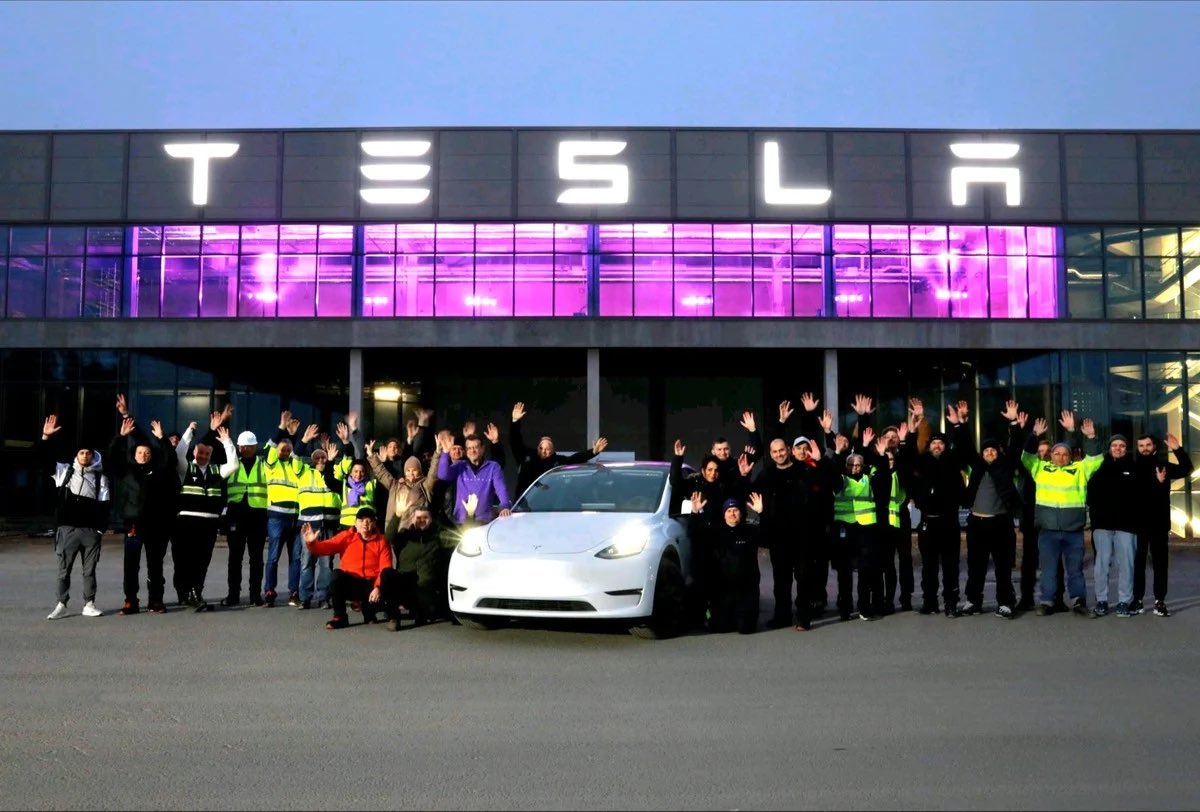
Tesla is opening a new round of hiring at Giga Berlin this September — 1,000 more positions, the plant’s third headcount expansion announced this year, at a moment when Germany’s traditional car industry is struggling with a broader slowdown. Brandenburg’s economics minister, Martina Klement, called the move a “strong commitment” to the region, with the state government’s economic development arm putting the total job creation from this expansion phase at up to 3,500 positions.
From 6,200 to 7,500 cars a week
Tesla already hired and trained 1,000 workers earlier this year to lift output from 5,000 to 6,200 vehicles a week. This new round targets the next step: 7,500 vehicles a week by October, as demand across Europe picks up. Staggering the hiring this way gives the plant time to train new workers on the line before each output jump, rather than absorbing a large cohort all at once — a deliberate operational choice that has repeated across all three expansion rounds this year.
Of the roughly 3,500 additional jobs flagged across the year’s expansion plans, around 1,500 are tied specifically to battery cell production. That lines up with the €250 million investment Tesla announced in May to scale 4680 cell output at Giga Berlin from 8 to 18 GWh a year — more than doubling a capacity target that had been set only months earlier. Vertical integration of battery manufacturing, not just final assembly, is increasingly what distinguishes Giga Berlin’s role within Tesla’s European supply chain.
More than assembly: a thermal system built in-house
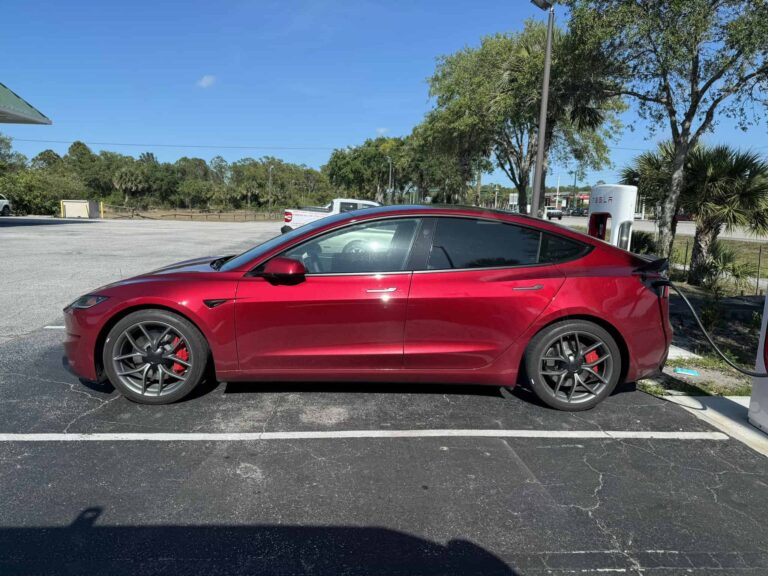
The hiring push comes alongside a quieter engineering milestone. A Coastal Blue Model Y Standard built at Giga Berlin on 27 August confirmed that the Super Manifold V2 thermal management system is now standard on European-built Model Y units — consolidating up to 15–20 separate heat-pump components into a single unit that manages coolant flow between the battery, drive units and cabin HVAC. It’s a sign the Berlin plant’s role is expanding beyond final assembly into genuine engineering ownership of European-spec vehicles, not simply replicating designs validated elsewhere.
What this means for European buyers
For European buyers, the practical upside is straightforward: more local production capacity generally means shorter delivery windows as demand grows, and less exposure to trans-Atlantic shipping constraints or import tariffs on vehicles built outside the EU. It also means more of the value chain — cells, thermal systems, final assembly — sits inside Germany rather than being imported, which is precisely the argument Brandenburg’s government is making in welcoming the expansion at a time when several German suppliers are cutting jobs elsewhere in the country.
Giga Berlin has not been without friction — water use and environmental permitting have drawn legal challenges since construction began, and Tesla Mag tracks those disputes separately as part of our ongoing coverage of the site. None of that is in question with this particular announcement, which concerns headcount and output targets specifically.
This is part of our ongoing coverage of Giga Berlin — production, hiring, suppliers and the disputes that come with them.
Sources: Tagesspiegel; Berliner Zeitung; Brandenburg Ministry for Economic Affairs, Energy, Climate Action and European Affairs; Tesla.