Can AI-Powered Cars Outpace Human Drivers? A Look into Tesla’s FSD Potential
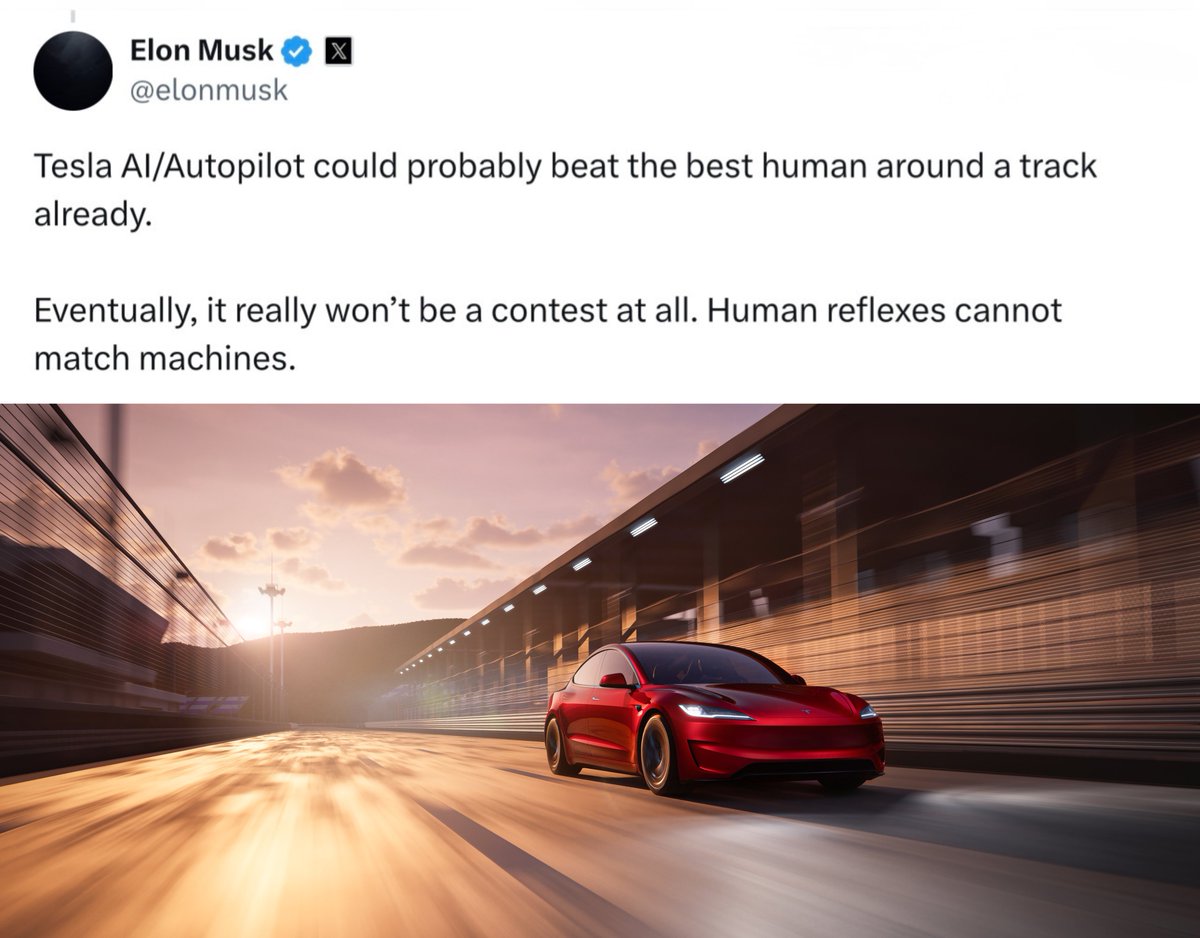
The automotive industry is buzzing with the latest claims from Elon Musk, CEO of Tesla, who confidently states that Tesla’s Full Self-Driving (FSD) technology could potentially outperform the best human race car drivers on the track today. This bold declaration brings a fascinating discussion to the forefront: can machine intelligence truly surpass human reflexes in racing?
The Rise of Artificial Intelligence in Motorsports
The integration of AI into the automotive industry is not a novel concept; however, its application in motorsports is turning heads. As AI technology evolves, autonomous driving systems become increasingly sophisticated, ultimately challenging the very essence of traditional racing. Tesla’s FSD is designed to navigate complex environments sans human intervention, raising the question of how such technology might advance competitive racing.
Human vs. Machine: A Historical Perspective
Historically, human participation in racing has always been celebrated for the skills and reflexes showcased on the track. The involvement of cutting-edge technology in motorsports isn’t new; drivers have benefited from various computerized aids. However, the prospect of a fully AI-driven vehicle competing against human drivers takes the intersection of technology and sport to a whole new level.
The Technological Edge: Precision and Consistency
The key advantage of AI in racing lies within its precision and consistency. Machines aren’t susceptible to fatigue, emotional stress, or misjudgment under pressure. This allows AI-driven vehicles to replicate optimum performance reliably, lap after lap. The potential for a machine like Tesla’s FSD to outperform humans isn’t just a science fiction plot; it’s a real possibility that leverages technological advancements in machine learning and sensor technologies.
The Impact on Motorsports
Tesla’s assertion opens up new dialogues concerning the future of motorsports. While AI can perform at incredible levels of accuracy, the charisma of human-driven races offers a different kind of appeal. The thrill of human error and success may not be easily replaced by machinery. The integration of AI in racing could eventually lead to a new genre of motorsports, one where autonomous vehicles hold center stage.
Implications for the Automotive Industry
Beyond racing, these advancements in FSD technology have broader implications. The continuous development of autonomous systems could revolutionize how we perceive and interact with vehicles in general. With increasing capabilities to handle complex driving tasks independently, AI could redefine safety and efficiency standards across the industry.
A Glimpse into the Future
While Elon Musk’s statements certainly sparked intrigue, the journey of autonomous vehicles in racing is only beginning. Demonstrating Tesla’s FSD capabilities in a real-world racing scenario would not only serve as a groundbreaking advertisement but also as a pivotal moment in demonstrating the power of AI. As the line between human and computer-driven performance blurs, the future of motorsports might just look drastically different.
The idea of AI fighting it out in race circuits heralds a new chapter for technology and sports, one that promises not just speed, but also a glimpse into a future where technology and humans collaborate to push the limits of what’s possible. Will AI truly outpace human drivers? Only time and further testing will tell.