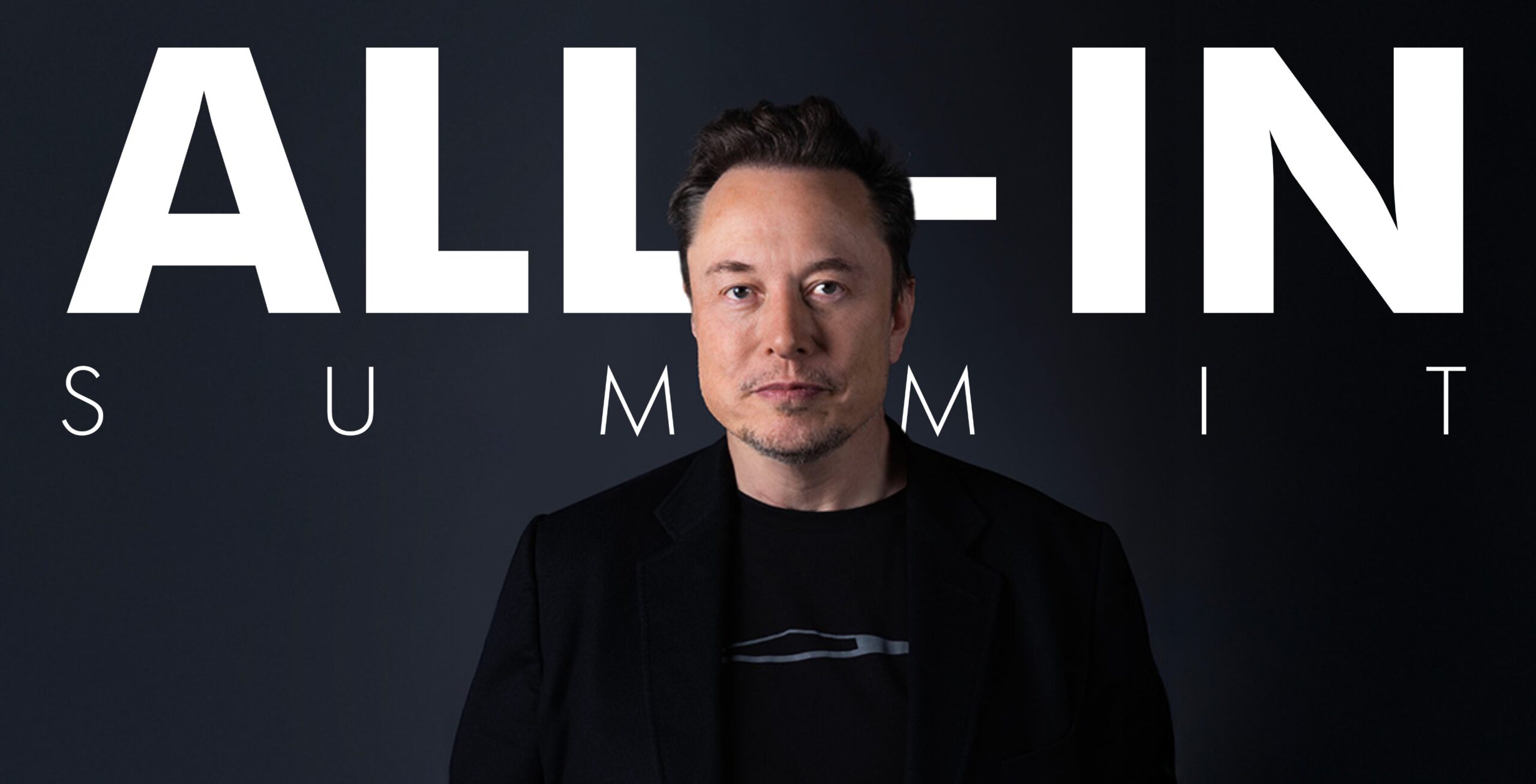
In a recent interview at the All-In Summit, Elon Musk unfolded his grand vision for the future, driven by advancements in AI, robotics, and his companies Tesla and SpaceX. His insights paint a picture of a world transformed by these technologies, with significant implications for the national debt, human dexterity in robotics, and space travel.
The Role of AI and Robotics in Economic Transformation
Elon Musk highlighted the crucial role that AI and robotics will play in addressing significant global challenges, particularly national debt. According to Musk, without leveraging AI and robotics, tackling such an enormous economic issue would be impossible.
Tesla’s flagship humanoid robot, Optimus Gen 3, is set to be a cornerstone of this transformation. Its design is focused on achieving manual dexterity comparable to a human’s, a feature that could revolutionize industries dependent on intricate manual labor. Musk emphasized the importance of in-house production at Tesla, where every aspect of Optimus—from the AI chip to its 26 actuators per arm—is crafted without external supply chains.
The Challenges and Innovations of Optimus Gen 3
Developing the Optimus Gen 3 is not without its challenges. Musk admitted that creating this humanoid robot is more complex than current Tesla vehicle models but not as daunting as crafting the SpaceX Starship. The engineering difficulties mainly lie in the robot’s forearms and hands, areas demanding unprecedented precision and control.
Cost efficiency remains a key goal for Tesla, with the production cost target set around $20,000 per unit once they reach an annual production level of 1 million units. However, the sophisticated AI chip required could push this cost higher, emphasizing the intersection of cost, complexity, and cutting-edge technology.
Tesla’s Leap in AI: From AI4 to AI5
The leap from AI4 to AI5 represents a significant milestone for Tesla. Musk shared that AI5 will outperform AI4 by a considerable margin—40 times better in some metrics, with eight times more compute power, ten times the memory, and five times the memory bandwidth. This improved AI platform is not just a technological feat but a pathway to achieving fully autonomous vehicles that surpass human driving safety by several folds.
Furthermore, Tesla’s software, particularly the upcoming FSD (Full Self-Driving) version 14, promises to be revolutionary, making cars feel almost sentient by year’s end. This enhancement in Tesla’s AI suite exemplifies the continuous push towards sustainable and intelligent transportation solutions.
Starlink and the Evolution of Connectivity
SpaceX’s Starlink initiative is also on the brink of a connectivity revolution. By leveraging new spectrum deals, SpaceX aims to deliver high-bandwidth satellite connectivity directly to mobile phones. This shift will require significant changes in phone hardware, expected to roll out in two years, capable of using these new frequencies.
This evolution in connectivity promises to allow users global video streaming capabilities and enhanced indoor signal reception, extending the bounds of conventional telecommunications far beyond current capabilities.
The Future of Space Travel and Sustainability
Looking to the stars, Musk shared insights into the upcoming iterations of SpaceX’s Starship. The next generation V3 Starship is not only a radical redesign but aims to be fully reusable, vastly improving cost efficiency for space missions. Musk envisions a future where a self-sustaining human presence on Mars is achievable within 25 years, a testament to his enduring vision of life beyond Earth.
Beyond the technical specifications, Musk’s vision is driven by a profound belief in humanity’s capability to reach unprecedented technological milestones. As the world eagerly watches, Musk’s plans may not only redefine industries but alter the fabric of everyday life, bringing science fiction closer to reality.