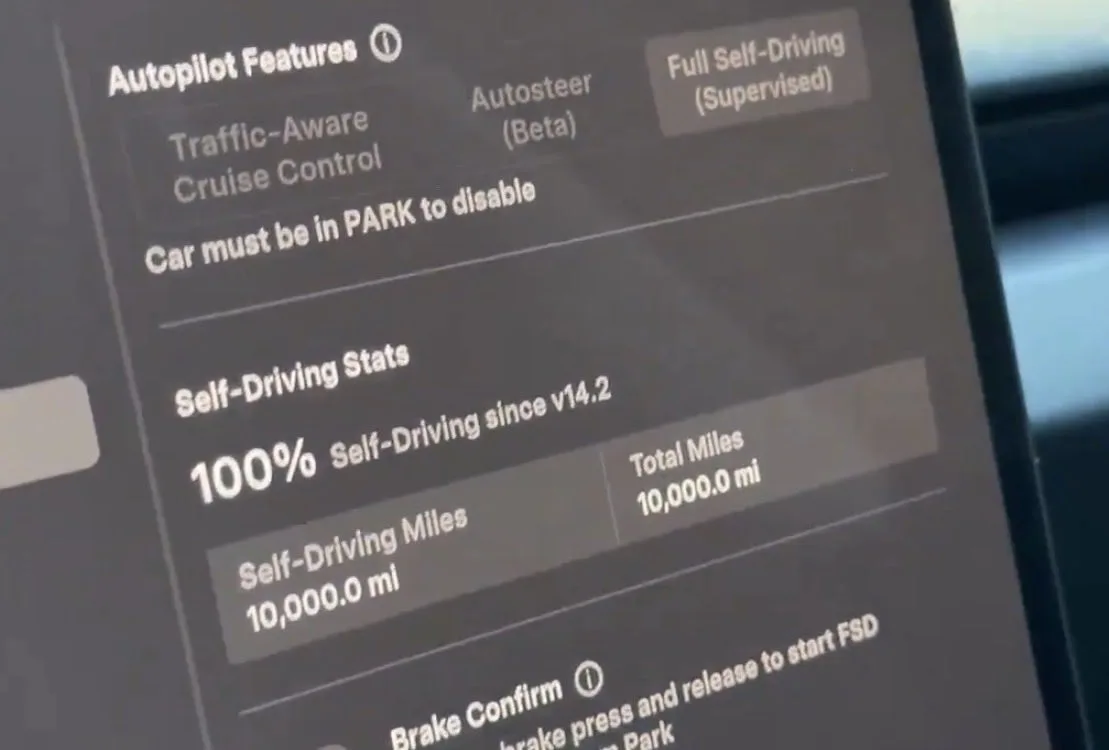
The evolution of autonomous vehicles has taken a significant leap forward as David Moss embarks on a remarkable journey across America, driving more than 10,000 miles with the assistance of the fully autonomous Full Self-Driving (FSD) v14.2 system. This feat underscores the transformative potential of autonomous technology in reshaping our perceptions of transportation.
The Journey of a Lifetime
Embarking on a coast-to-coast road trip, David Moss’s expedition spanned over 24 states, highlighting the capability of modern technology in a diverse range of driving conditions and terrains. From bustling city highways to serene rural landscapes, the journey tested the limits of the FSD system and reaffirmed its abilities.
This incredible achievement comes without the need for driver interventions or disengagements, setting a new benchmark in the field of autonomous driving. Throughout the trip, the vehicle managed a wide array of operational tasks, from route planning to parking and even recharging at Supercharger stations.
Understanding Full Self-Driving Technology
Full Self-Driving (FSD) technology represents the future of vehicular travel, combining advanced sensors and artificial intelligence. The latest version, v14.2, is a testament to years of research and development, offering unparalleled precision and reliability.
The core of FSD technology lies in its ability to analyze and adapt to real-world scenarios in real-time. Using a sophisticated suite of cameras, radars, and algorithms, FSD can anticipate and react to various obstacles and challenges, ensuring the safety and convenience of autonomous journeys.
Real-World Applications and Implications
The success of this journey shines a light on the practical and societal implications of autonomous driving. With advancements in technology, there are significant implications for traffic management, environmental sustainability, and urban planning. Autonomous vehicles have the potential to reduce congestion, improve fuel efficiency, and decrease emissions.
Furthermore, the implications for accessibility are profound. Autonomous vehicles can offer new solutions for individuals unable to drive, promoting inclusivity and independence.
The Road Ahead
While this milestone marks a significant achievement, it is only the beginning. The journey of 10,000 miles with the FSD v14.2 is an encouraging indicator for future developments in transportation. As regulatory frameworks evolve and technology continues to advance, the widespread adoption of autonomous vehicles could be closer than anticipated.
Future updates to FSD technology will likely enhance its capabilities, bringing us closer to a world where autonomous vehicles are commonplace on our roadways. The path is set for an exciting era in transportation, where the boundaries of human interaction with vehicles are continuously redefined.
David Moss’s epic cross-country trip serves as a beacon of what is possible through technological innovation, and as we look to the future, it is clear that the landscape of travel is on the brink of revolutionary change.
Source: Original Tweet