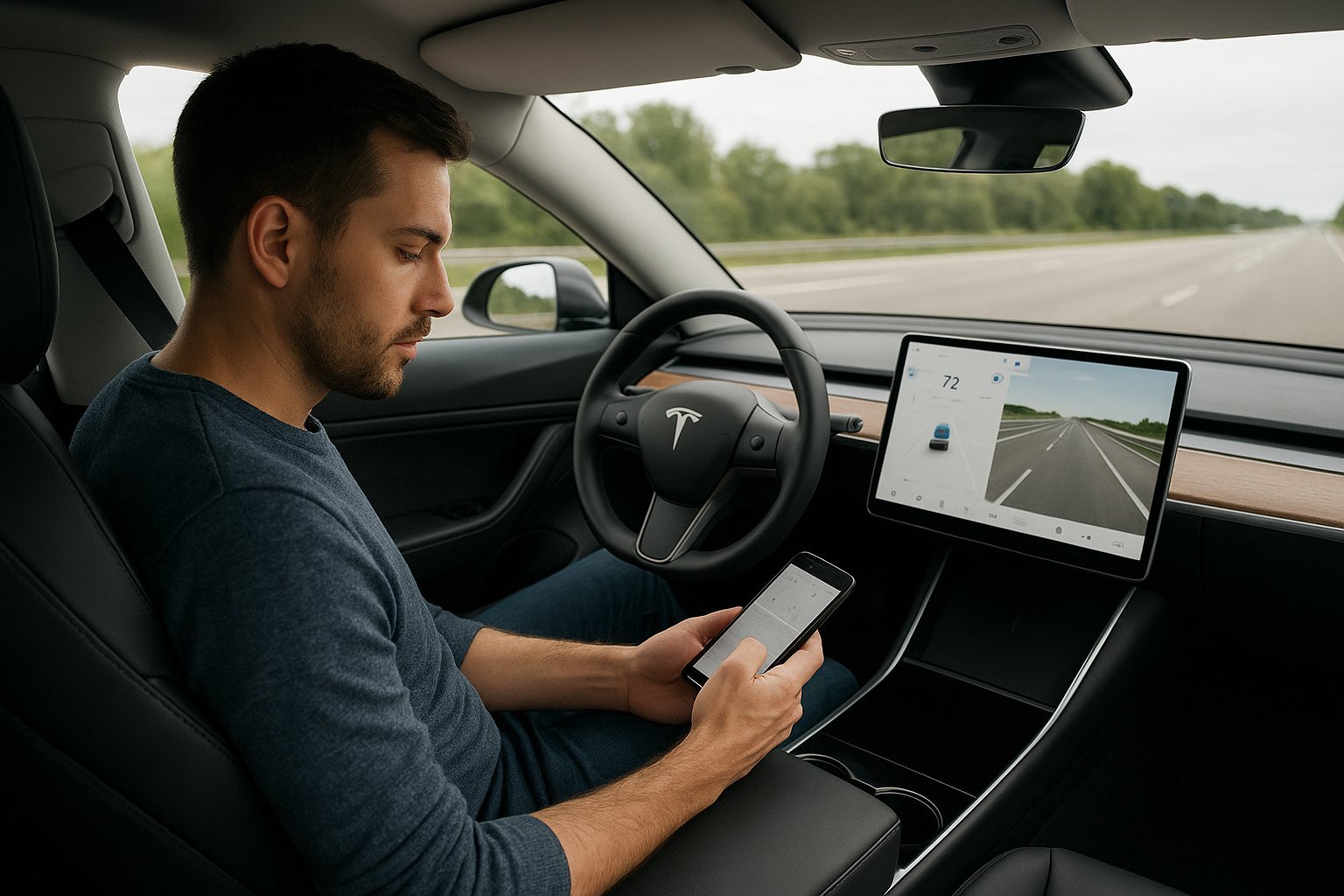
Tesla’s Evolution of FSD: Embracing Texting for Enhanced Safety
The concept of self-driving cars has long fascinated the public, with Tesla at the forefront of this technological revolution. Elon Musk’s recent advocacy for enabling texting while using Tesla’s Full Self-Driving (FSD) system has sparked conversations about the evolving nature of driving safety and autonomy.
Addressing Modern Driving Challenges
In an era where people are constantly connected, the necessity to communicate on the go has become a significant part of daily life. Elon Musk suggests that FSD could offer a safer avenue for such activities. Traditionally, texting while driving has been considered a major safety hazard. However, Musk proposes that when engaging Tesla’s Autopilot, allowing drivers to text could be safer than forcing them to disengage and text manually.
Why Texting While Using FSD is a Safety Issue
The primary concern that has driven this proposal is safety enhancement. The act of switching off Autopilot to deal with texts might momentarily divert a driver’s attention from monitoring the road, posing more risk. By enabling texting while the FSD system is engaged, drivers can keep a close eye on the road conditions while the vehicle manages much of the driving task. This, in theory, reduces the chance of distraction-related mishaps.
Technological Adaptations in FSD
To implement Musk’s vision, Tesla is poised to refine its software. This involves optimizing sensors and algorithms to ensure that the car maintains control, even when the driver is not directly engaged in driving. The improved system is expected to offer robust safety enhancements, strengthening the connection between the human operator and the autonomous system.
Implications for the Future of Driving
This potential evolution in FSD signals a broader shift in how automation integrates with human habits. If successful, more manufacturers might adopt similar systems, reshaping regulations and societal expectations of road safety and personal tech use.
Allowing texting during autonomous driving doesn’t merely adjust personal convenience but emphasizes adapting to lifestyle changes while ensuring safety. This move could set a precedent, encouraging other automotive leaders to consider and develop systems catering to modern-day multitasking without compromising safety.
Consumer Reactions and Considerations
Initial public response is mixed. Some express excitement over improved convenience, while others have raised concerns about the potential risks. Skeptics argue that promoting texting during driving, although supervised, could blur lines between responsible tech use and the over-reliance on automation.
Despite the criticism, supporters of Musk’s idea claim that proper implementation could address these concerns and highlight the importance of maintaining a vigilance culture while utilizing advanced technologies.
In conclusion, as Tesla moves towards this integration, the auto industry awaits with bated breath. The next few months will be crucial in determining if the integration of texting with FSD will indeed revolutionize driving norms or spark debates around over-dependence on technology.