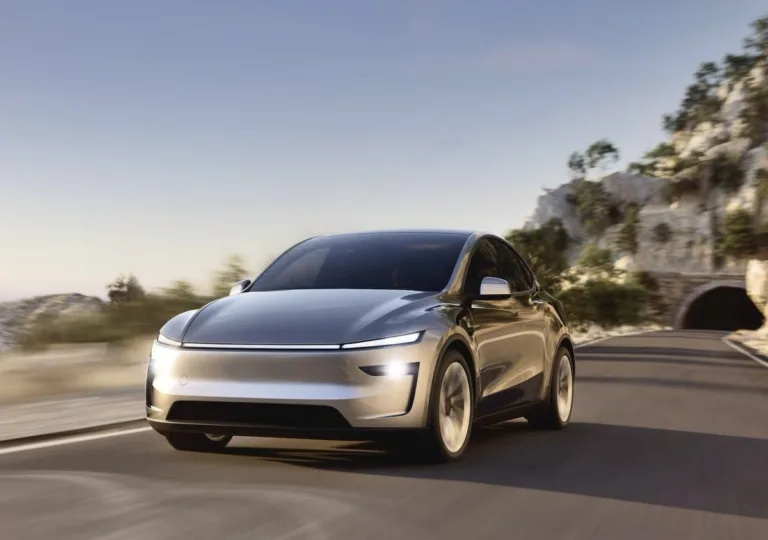
Tesla updated its FSD (Supervised) safety report overnight. In North America, a Tesla driving with the system engaged now covers an average of 6,006,200 miles before a major collision. That is nine times the U.S. average estimated by Tesla, and three times a Tesla driven manually. What the figures say, how they are calculated, and where Europe stands.
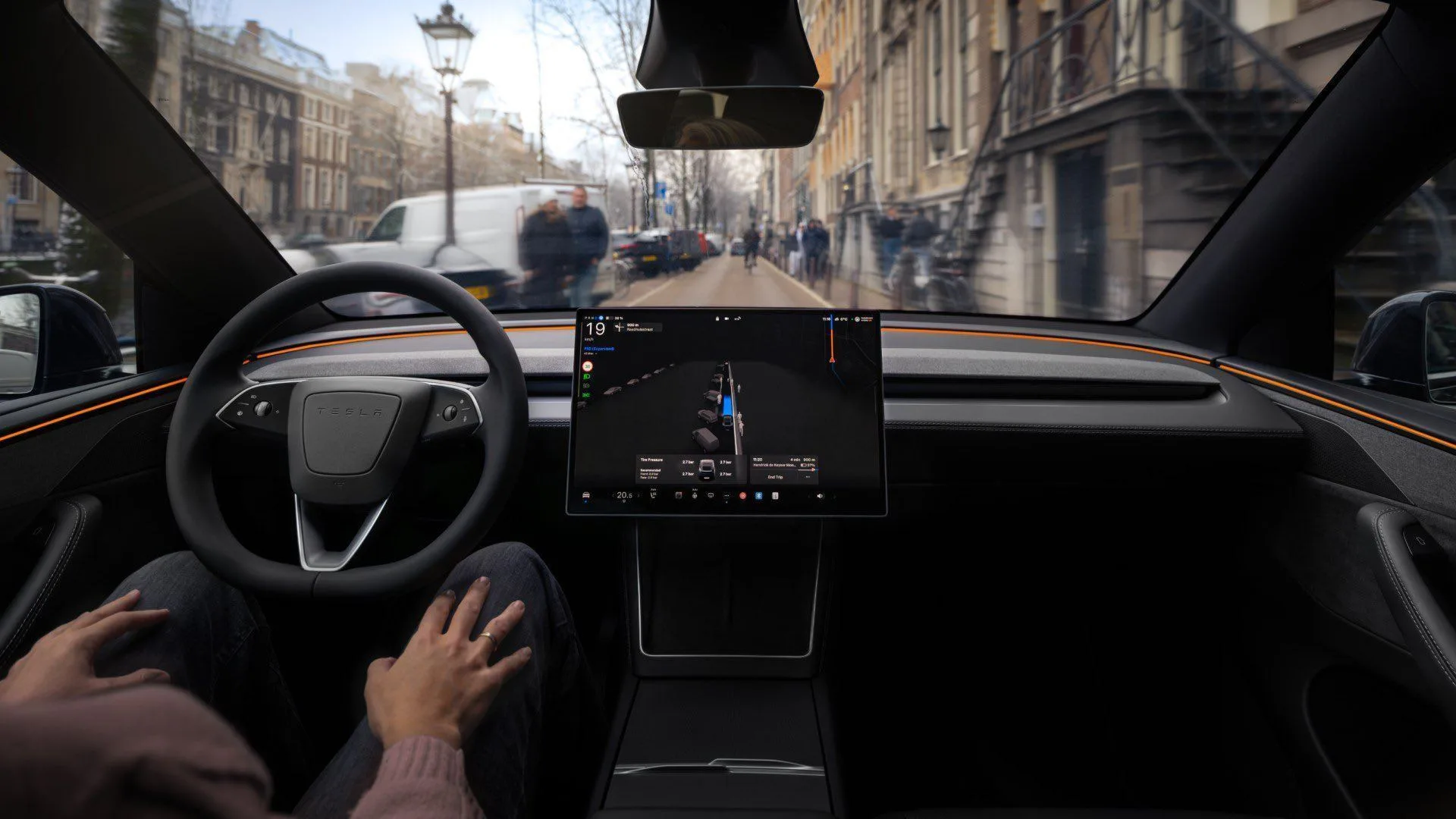
The figures published by Tesla
The report covers the last twelve months in North America. Over that period, Teslas driving with FSD (Supervised) covered 9.48 billion miles and had 1,579 major collisions, meaning collisions in which an airbag or another restraint was deployed.
| Driving mode | Miles before a major collision | Miles before a minor collision |
|---|---|---|
| Tesla with FSD (Supervised) | 6,006,200 | 1,760,823 |
| Tesla driven manually, with active safety features | 2,031,221 | 685,390 |
| Tesla driven manually, without active safety features (pre-2014) | 845,915 | 285,435 (estimate) |
| Estimated U.S. average | 660,164 | 225,322 (estimate) |
Tesla draws three headline figures from it: 9 times fewer major collisions, 7 times fewer minor collisions and 6 times fewer off-highway collisions than the U.S. average. Compared with a Tesla driven manually, which already has automatic emergency braking and collision warnings, the gap is about 3 times for major collisions (Tesla Mag calculation).
The counter on the page has moved too: 16.7 billion miles driven on FSD since launch, including more than 6.6 billion in cities.
How Tesla counts collisions
- What a collision is. Tesla uses the U.S. federal definition: an impact that deploys an airbag, or a change in velocity of at least 8 km/h within 150 milliseconds.
- When FSD is counted. If the system was active at any point in the five seconds before the impact, the collision is attributed to FSD, even if the driver had taken over.
- No fault assigned. Tesla counts every collision, whoever caused it.
- The U.S. average is an estimate. Tesla calculates it from miles traveled published by the Federal Highway Administration and crashes recorded by NHTSA.
- What is excluded. Data from China. The report is updated every quarter over a rolling twelve months; Tesla does not give the exact dates.
And in Europe?
On the same page, Tesla lists 17 markets where FSD (Supervised) is available, including ten European countries: the Netherlands, Lithuania, Estonia, Denmark, Belgium, Slovenia, the Czech Republic, Croatia, Slovakia and Latvia. France, Germany, Italy and Spain are not on the list, and Tesla gives no timeline for other countries. In Europe, the feature is now called Tesla Assisted Driving.
Source: Tesla, “Full Self-Driving (Supervised) Vehicle Safety Report”, tesla.com/fsd/safety, accessed October 27, 2026. This article is also available in French.
FSD and Europe’s governments. On October 20, 2026, Tesla Mag opened a written consultation of the transport authorities of 28 European states on Tesla’s FSD (Supervised). Official answers, commitments and refusals: follow the consultation country by country in our tracker.