Tesla’s Robotaxi: Pioneering the Future of Autonomous Transport in Austin
The world of autonomous vehicles is rapidly advancing, and Tesla is at the forefront of this transformation. Recently, Tesla has been testing its next step in autonomous transport: the Tesla Robotaxi, the latest iteration of their Full Self-Driving (FSD) technology, in the vibrant city of Austin, Texas. This latest test holds a curious twist—aside from the technology itself, a feline passenger seems to play a symbolic role in supervising these trials.
The Evolution of Robotaxis
Robotaxis represent the culmination of years of development in autonomous driving technology. Tesla’s FSD system is designed to be fully self-operational, which is a goal that not only changes the dynamics of personal transportation but could also entirely redefine shared mobility services. The Austin trials, which feature vehicles with no driver seats occupied, mark a significant step forward in autonomous vehicle testing.
Austin: The Testing Ground for Innovation
With its bustling tech scene and a city known for embracing innovation, Austin is the perfect environment for Tesla’s Robotaxi trials. The city provides a diverse range of traffic scenarios, from urban congestion to sprawling suburban areas, offering a comprehensive testbed for the FSD system’s capabilities. The trials are expected to produce valuable insights into the performance and safety of fully autonomous technology in real-world scenarios.
The Role of Advanced Technology
At the core of these trials is Tesla’s sophisticated suite of sensors, cameras, and artificial intelligence technologies. The no-human-in-front-seat setup, aside from emphasizing the maturity of FSD, suggests a confidence in the system’s ability to navigate its environment autonomously. Utilizing advanced machine learning algorithms, the FSD is continuously improving, adapting, and optimizing its decision-making processes for efficiency and safety.
Public Reception and Industry Impact
The public’s reaction to Tesla’s Robotaxi has been one of intrigue and cautious optimism. Market analysts predict that successful trials could accelerate the timeline for broader consumer acceptance of fully autonomous vehicles. Furthermore, this shift could herald a drastic change in urban transportation systems, reducing the need for private vehicle ownership and diminishing urban congestion.
The Curious Case of the Feline Supervisor
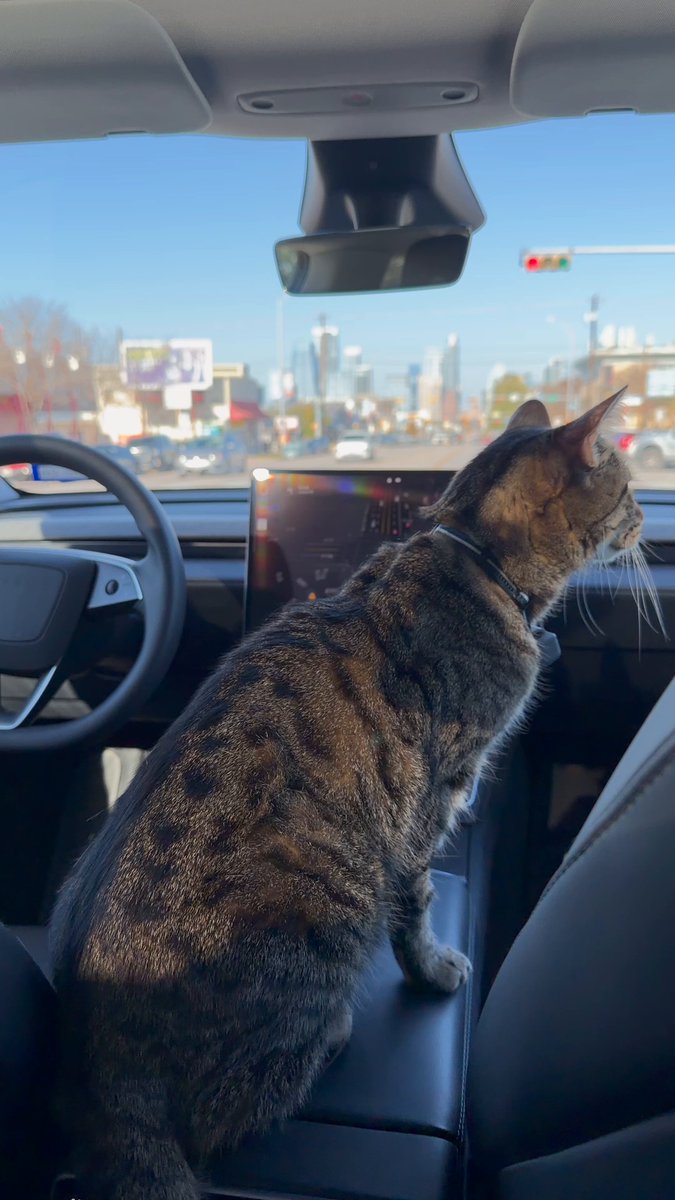
In an unexpected and delightful twist, one of the test videos features a cat seated where a human driver would typically be. While clearly a humorous social media moment, it highlights a broader narrative about the reduced human role in operating vehicles. Although the cat has no functional role in the operation of the vehicle, it symbolizes the future where the human or animal presence in a vehicle might be merely as passengers or observers.
Looking Forward
As Tesla continues its trials in Austin, all eyes are on the potential realization of fully autonomous taxis in the near future. The implications of this could extend beyond transportation, affecting employment, urban planning, and environmental policies. If successful, Tesla’s Robotaxi might soon translate sci-fi visions of laborious commutes into seamless, autonomous journeys, changing our lives in unimaginable ways.
Stay tuned as Tesla’s Robotaxi navigates not just the streets of Austin, but the future path of global transportation.